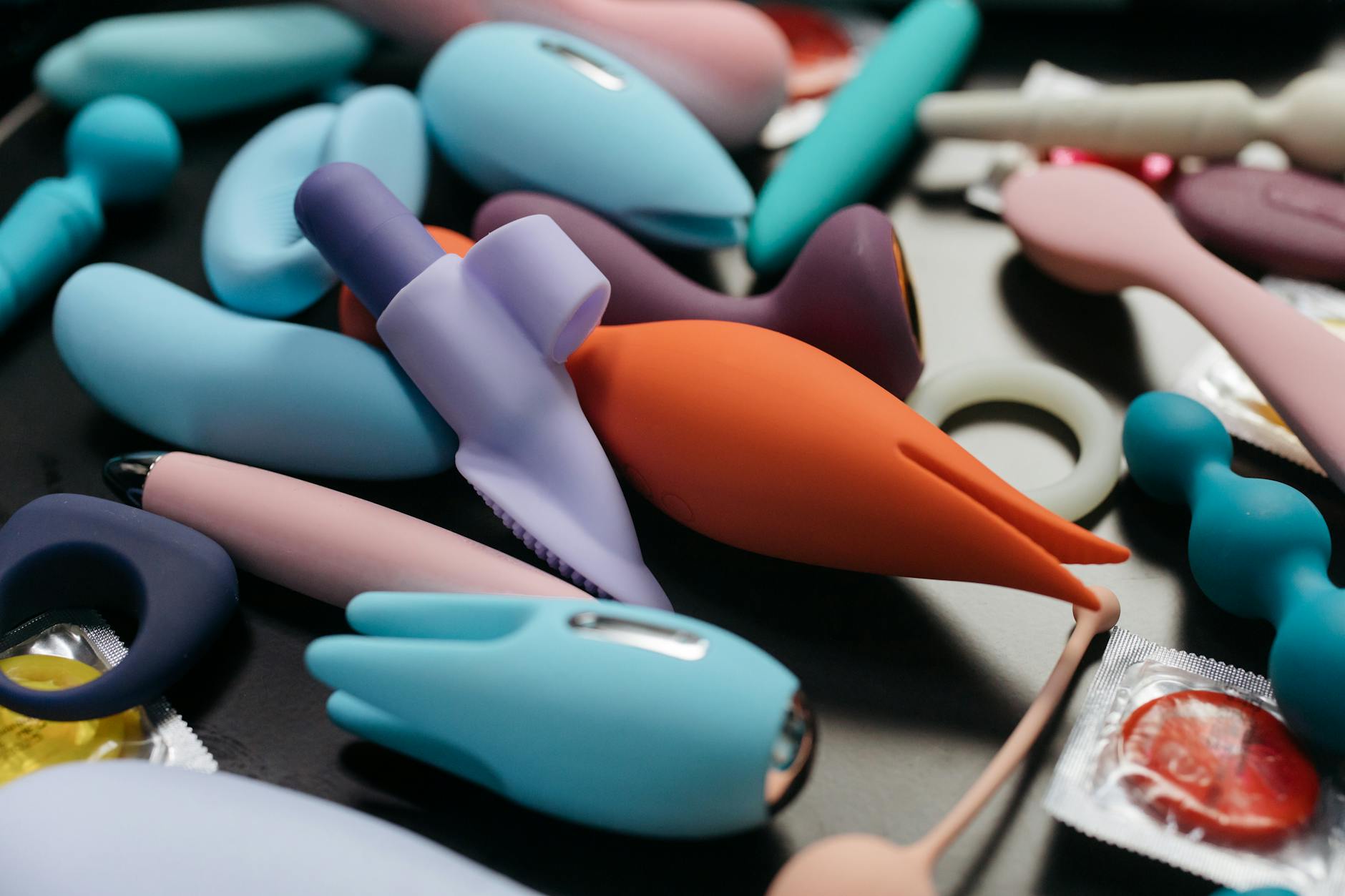
Let's talk about the invisible side effect
Antidepressants work. They pull you out of the fog, steady your mood, give you your life back. And then, quietly, they take something else: the ability to feel sexual pleasure the way you used to. You're not broken. Your medication isn't failing. This is one of the most common and least discussed trade-offs of psychiatric treatment.
I work with couples every week where one partner is on an SSRI or SNRI, and the conversation goes like this: "I feel better mentally, but I can't orgasm anymore. Or it takes forty minutes. Or I just don't want sex at all." Then comes the shame, the wondering if they should quit their medication, the pressure from a partner, the grief over losing a part of themselves they liked.
Here's what I want you to know first: you don't have to choose. There are concrete ways to rebuild pleasure while staying on medication that's keeping you stable. Lemon clitoral vibrators are one of the most effective tools I recommend, and I'm going to explain exactly why.
How antidepressants flatten sensation
SSRIs increase serotonin in the brain by blocking its reuptake. That helps depression. But serotonin also sits in receptors throughout the spinal cord and genitals, and higher serotonin can dampen the neural signals that create arousal and orgasm. You're not imagining it.
Meanwhile, the physical side effects stack up: reduced blood flow to genital tissue, delayed lubrication, difficulty with arousal, and suppressed desire. For some people on medication, the orgasm threshold gets so high it feels unreachable. For others, the sensation goes numb.
The cruel part is that stopping the medication often isn't an option. Depression will come back. Anxiety will return. You need the medication. But you also deserve to feel pleasure.
Why lemon vibrators work better than you'd expect
A standard vibrator uses vibration alone. If your neural pathways are already dulled by medication, vibration alone might not reach the threshold needed for arousal. This is why so many people on SSRIs report that their old vibrator stopped working.
Lemon clitoral vibrators like Hello Nancy's Lem work differently. They use pulsing suction combined with gentle vibration. This dual stimulation reaches deeper into the clitoral network without requiring the intensity that medication-dulled tissue often can't access.
Think of it this way: your nervous system is running at half volume. A standard vibrator is knocking on the door. A lemon sucker is breaking through the window. The suction creates a seal that draws blood flow directly to the area, which wakes up sensation that medication has put to sleep.
In my clinical experience, people on antidepressants report results with suction-based clitoral vibrators that they haven't felt in years. It's not placebo. It's neurophysiology.
The practical steps to restart sensation
If you've been on antidepressants long enough to lose arousal, rebuilding it takes intention. Here's what works:
Start with exploration, not expectation. Use your lemon clitoral vibrator when you're not trying to orgasm. No deadline, no goal. Just twenty minutes alone to rediscover what touches feel like. This rebuilds the neural connection between touch and pleasure that medication has interrupted.
Begin on the lowest setting. Most people reaching for a vibrator after sexual shutdown want intensity. Resist that. Start at pattern one or two. Let your body remember sensation before you ask it to perform.
Budget time differently. Antidepressant-related sexual dysfunction often means arousal takes longer. Instead of five minutes of foreplay, try twenty. That's not failure. That's just your body's new rhythm. Lemon vibrators accelerate this, but they don't eliminate the need for patience.
Use lubrication even if you think you don't need it. Antidepressants reduce natural lubrication. Water-based lube isn't optional here. It reduces friction, increases sensation, and signals to your body that pleasure is happening.
Communication if you have a partner
This is where couples get stuck. A partner might interpret sexual flatness as lack of interest in them. You might interpret their frustration as pressure. The pleasure gets weaponized into a relationship problem.
Separate the conversation. "My body needs different stimulation than it used to" is a neutral fact. "I want to explore with you and find what works now" is an invitation. "I'm excited about trying something new together" is not "my medication broke our sex life."
Many partners want to help. They just don't know how. Using a lemon clitoral vibrator together, with communication about what feels good, often transforms the dynamic from "why isn't this working" to "let's discover this together."
The Lem or similar lemon vibrators are designed so partners can be involved in the experience. It's not a replacement for connection. It's a bridge back to it.
When to talk to your doctor
Don't silently suffer and don't quit your medication hoping desire returns. There are legitimate medical adjustments.
If antidepressant side effects are severe, your prescriber might shift you to a different SSRI or add a medication like bupropion that counteracts sexual side effects. They might adjust timing (some people take their dose at night instead of morning). Or they might add a short-term booster like buspirone on a specific schedule.
You have options. Your psychiatrist wants you stable and functional, and that includes sexual function. Bring this up.
Rebuilding desire, not just orgasm
Here's something that trips people up: even when an orgasm returns, desire might not follow at the same speed. Antidepressants can suppress the wanting itself, not just the ability to come.
This is where exploration becomes crucial. Use your lemon clitoral vibrator not because you think you should, but because you're curious. Masturbation on antidepressants becomes research, not obligation. You're learning your body again.
Many people find that solo pleasure returns before partnered pleasure. That's normal. Solo exploration with a lem vibrator gives you data: what settings work, how long it takes, whether you need mental space or music or silence. Then you can bring that knowledge to partnered sex.
The timeline is not linear
Don't expect to go from flatness to orgasm in a week. The neural rewiring takes time. Some people see shifts in a few weeks. Others take months. Antidepressants have been dulling sensation for however long you've been taking them. That doesn't reverse overnight.
But it does reverse. I've worked with dozens of people who spent a year thinking they'd lost pleasure forever. Most of them, with patience and the right tools, got it back. Not always exactly the same. Often better.
People also ask
Will switching antidepressants definitely fix sexual side effects?
Not always. Some people find a medication that doesn't flatten desire as much. Others find that any SSRI suppresses arousal, so the switch helps only a little. The frustrating truth is that psychiatric medication is individual. What works sexually for your friend might not work for you. But it's worth discussing with your prescriber. Sometimes the right match exists on your first try.
Can I just take a higher dose of my antidepressant and use a stronger vibrator?
No. Increasing your dose for sexual reasons will likely make sexual dysfunction worse, not better. And chasing intensity with a stronger vibrator when your neural pathways are already dulled often leads to numbness instead of pleasure. Start low, go slow. Quality of sensation matters more than power.
How long does it take to feel sensation again after starting a lemon clitoral vibrator?
Most people notice a difference in the first few sessions. Real pleasure usually takes a few weeks of consistent, low-pressure exploration. Think of it as retraining your nervous system, not switching on a light.
Is it normal to need toys now when I didn't before?
Completely. Your body has changed due to medication. That's not weakness or dependence. It's adaptation. A lemon vibrator is a tool for pleasure just like lubricant is a tool for comfort. Using it doesn't mean you've failed at sex. It means you're being realistic about your body's current needs.
Should I tell my partner I'm using a lemon clitoral vibrator?
That depends on your relationship. In my experience, partners respond better when they understand the "why." "My medication is making arousal harder, so I'm using this to help rebuild sensation" is very different from "I'm using this because you're not enough." Most partners are relieved to have a solution that doesn't involve them doing something wrong.
What if a lemon vibrator doesn't help?
Then there are other routes. A pelvic floor physical therapist can help restore sensation. Certain medications specifically address sexual side effects. Sex therapy or couples therapy can help rebuild intimacy when desire is flat. Don't assume one tool will solve everything. But statistically, lemon clitoral vibrators help a significant percentage of people on antidepressants regain pleasure. It's worth trying before you assume you're stuck.
The bottom line
Antidepressants are worth the trade-off for your mental health. But that trade-off doesn't have to be permanent or absolute. Your pleasure matters. Your body's capacity for sensation can return. And tools like lemon clitoral vibrators can speed that return significantly.
You didn't lose yourself to medication. You're in a different chapter, one that requires different approaches. That's not failure. That's adaptation. And with patience, exploration, and the right support, most people find their way back to pleasure. Sometimes even better than before.