
Let's start with what makes this weird
It's not the vibrator. It's the story you're telling yourself about the vibrator. Most people approach introducing a lemon clitoral vibrator to partnered sex like they're confessing a betrayal. "I need something extra." "You're not enough." "I have this problem we need to fix." None of that is true, and that framing is what creates the actual awkwardness.
Here's the real situation. Most people with clitorises don't orgasm from penetration alone. This is not a flaw. It's anatomy. A lemon vibrator is not an indictment of your partner's skills or your relationship. It's a tool that makes mutual pleasure easier and more reliable. That's it. Everything after that is just logistics.
The conversation part (which is shorter than you think)
Don't schedule a meeting. Don't write a note. Don't bring it up during a serious talk about "our intimacy." That escalates the stakes unnecessarily.
Instead, bring it up the way you'd mention wanting to try a new restaurant. Casually, without drama, when you're already in a good mood together. "Hey, I saw this thing called a lemon vibrator, and I'm curious about trying it together. Would that be fun?" That's the whole conversation.
If your partner says yes, great. Move to the next section. If they hesitate, ask what's actually worrying them. Most resistance falls into three buckets: they feel replaced (address this directly: "I want this because I want more pleasure with you"), they're nervous it won't feel natural (it won't, at first, and that's fine), or they just need time to think about it (give them that).
Don't oversell it. Don't build it into a bigger thing than it is. Calm, matter-of-fact confidence is attractive. Desperation or apology energy is not.
Before you actually use it together
Both of you should know how a lemon vibrator works. If you're introducing a lem vibrator to your partner for the first time, spend solo time with it first. Understand the intensity settings, the patterns, how it feels against different parts of the body. You can't guide someone through an experience you haven't actually had yet.
When you do use it together, pick a time when you're both genuinely interested and unhurried. Not midnight when you're both tired. Not when one of you is stressed about work. Pick a moment when you both actually want to be there.
Lubrication is your friend here, even more than when you're using a lemon clitoral vibrator solo. Water-based lube makes the whole experience smoother, literally. It reduces friction, increases glide, and honestly just makes things feel less clinical.
The actual mechanics of using it together
Here's what typically works: start with your normal foreplay. Let arousal build naturally for 10-15 minutes. Then, when things are already heading somewhere good, introduce the vibrator.
One of you holds it. Usually, your partner holds it and you guide their hand and tell them what feels good. This matters because it keeps the focus on your pleasure and also gives your partner something active to do, which paradoxically makes them feel more involved, not less.
Start at a lower setting. You already know your body responds well to a lemon sexual toy, but the addition of your partner's presence and attention changes the equation slightly. Your nervous system is working harder. Speed things up gradually, not suddenly.
Talk. Not philosophically. Practically. "That's perfect," "a little higher," "go slower," "exactly like that." Your partner can't read your mind, and directing them is not romantic failure. It's actually the hottest thing you can do because it tells them exactly how to make you feel amazing.
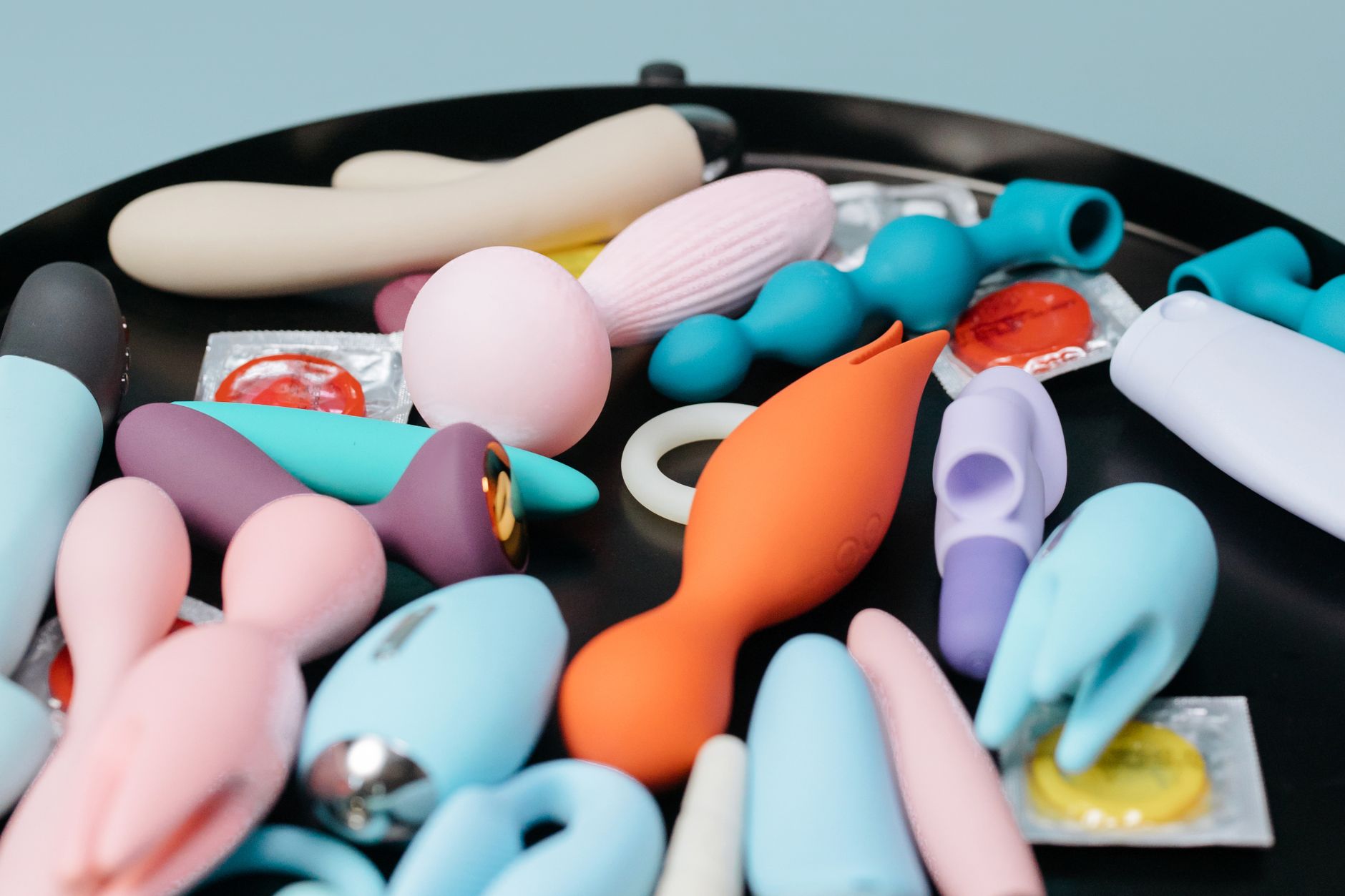
Photo by cottonbro studio on Pexels
What often happens the first time
You might feel a bit self-conscious. That's normal. Your partner might feel like they're doing something wrong or not enough. That's also normal. You might climax faster or differently than you usually do. That's fine too.
The first time is almost always awkward in small ways. You're coordinating two people and a new tool. You're managing new sensations and new feelings. You're probably slightly in your head about whether this is "working." All of this passes after one or two times.
One thing that helps: laugh about the awkward parts. If you can't find the right angle, if the vibrator drops, if something just feels strange. Humor metabolizes awkwardness in a way that forced seriousness never does. You're a team solving a puzzle, not a couple failing at sex.
The emotional part (which matters more than you think)
Some partners feel genuinely worried that introducing a lemon vibrator means their partner no longer wants to have sex with them. This is worth addressing directly if you sense it, even if they don't say it outright.
One approach: "This isn't about replacing you. It's about adding something that makes our sex better for both of us." Then actually show that through your behavior. Keep having sex without it too. Keep initiating sex with your partner. Keep doing the intimate things you've always done.
If your partner has their own body preferences or needs, ask about those too. Maybe they'd like to incorporate something different. Maybe there's a position or timing or approach that would feel better for them. This becomes a conversation about mutual pleasure, not just your pleasure.
Please also know that some partners will never love the idea of a vibrator in the bedroom, and that's their boundary to set. You can't argue someone into being comfortable with something. What you can do is decide whether this is a dealbreaker for you or whether you're willing to keep exploring together without it. Both answers are okay.
Using a lemon vibrator with a partner long-term
After the first few times, using a lemon clitoral vibrator together becomes just another part of your sexual repertoire. Sometimes you'll use it, sometimes you won't. Sometimes your partner will hold it, sometimes you will. Sometimes it'll lead to orgasm, sometimes it'll just feel nice and you'll move on to something else.
Honestly though, most couples find that introducing any new element to partnered sex creates a conversation that they were probably needing to have anyway. What do you both actually want from sex? What feels good? What are you both curious about? A vibrator is just the excuse to ask those questions out loud.
That's the part that matters. Not the specific tool. The actual communication. If you can bring a lemon sexual toy into your bedroom and have it feel normal and fun, you've done something way more valuable than adding a new toy. You've built a dynamic where pleasure and curiosity are things you talk about openly.
FAQ
Can I use a lemon vibrator if my partner is skeptical?
Yes, but only if you're willing to start slowly and actually listen to their concerns instead of pushing. Ask what specifically worries them. "Not enough for you?" is different from "I don't like toys in general," and each one needs a different response. Take their hesitation seriously, let them warm up at their own pace, and don't turn this into a thing where you're proving a point. If they're not into it after genuine, patient exploration, you'll need to decide what that means for your relationship.
Should I introduce it during sex or talk about it first?
Talk about it first. Surprising someone with a vibrator during sex, even with good intentions, creates a moment of disorientation that can feel intrusive. A five-second conversation beforehand makes the experience actually enjoyable instead of awkward.
What if my partner wants to use a vibrator on themselves during partnered sex?
That's completely normal and honestly really hot. Your partner knowing exactly what they need and doing it while you're involved is not a rejection. It's generosity because they're including you in their pleasure instead of just taking care of it alone later. Let go of the idea that your body alone should do everything for them.
How do I know if we're using the lem vibrator correctly as a couple?
If you're both enjoying it and orgasms are happening or feeling closer, you're doing it right. There's no correct technique. What works is what feels good. Some couples find that partnered stimulation with a lemon clitoral vibrator works best during penetration. Others use it beforehand. Some use it for foreplay and never during penetration. Try different approaches and notice what actually feels good instead of what you think should feel good.
What if we buy a vibrator and one of us loses interest?
That's fine. Not every toy is for every couple. Not every phase of a relationship is the same. What mattered was that you tried something together and communicated about it. That skill set transfers to everything else. If a lemon vibrator ends up in a drawer unused, that's not a failure. It just means that particular tool isn't your thing right now.
Is it weird if my partner wants to use it but I don't?
Not at all. You can absolutely hold a vibrator for your partner without wanting one used on you. Your pleasure preferences don't have to match perfectly. Some couples thrive with complementary desires. If you're happy watching your partner use a lemon sexual toy and having that be part of your intimate time together, that's a completely valid way to do this.
The real truth
Introducing a lemon vibrator to partnered sex is not a risk to your relationship. It's actually a signal that you both feel safe enough to explore together. You're saying, out loud, that pleasure matters. That curiosity matters. That you're willing to try something that might feel awkward or new.
That's the foundation of real intimacy. Not pretending everything is perfect already. It's being willing to ask for what you want and explore it together.
Start the conversation. Keep it light. Take your time. And then just try it and see what happens. Worst case, you laugh about it later. Best case, you discover something that makes your physical connection stronger. Either way, you win.