Here's what nobody tells you about perimenopause and pleasure
Your body doesn't turn off. It changes rhythm. Perimenopause (those 4-10 years before your last period) is when estrogen starts its slow fade, and that affects arousal timing, lubrication, and how quickly sensation builds. Most of the time, people assume this means the end of good sex. It doesn't. It means you need tools and knowledge that match what's actually happening in your body.
That's where lemon vibrators come in. Clitoral vibrators designed with suction technology bypass the friction-based stimulation that can feel too intense on changing tissue. Instead, they work with your nervous system's new pace.
What perimenopause actually does to sensation
Let's start with the physiology. In perimenopause, estrogen levels fluctuate wildly. Some days it's higher, some days it bottoms out. This instability changes three things:
Tissue thickness. The vulva's outer layers get thinner because estrogen supports collagen and elasticity. Thinner tissue can feel more sensitive to direct pressure, which is why friction-based toys sometimes feel wrong.
Arousal speed. It takes longer for blood to engorge the clitoris and labia. Instead of 5-10 minutes of foreplay working, you might need 15-25. This isn't dysfunction. It's just a different timeline.
Lubrication consistency. You might notice dryness on some days, then days when things feel totally normal. This inconsistency can be wildly confusing because you start to doubt whether your body is working at all.
Here's what doesn't change: your clitoris still has 8,000 nerve endings. Your brain still makes pleasure chemicals. Your capacity for orgasm is still there. The pathway just has a new speed limit.

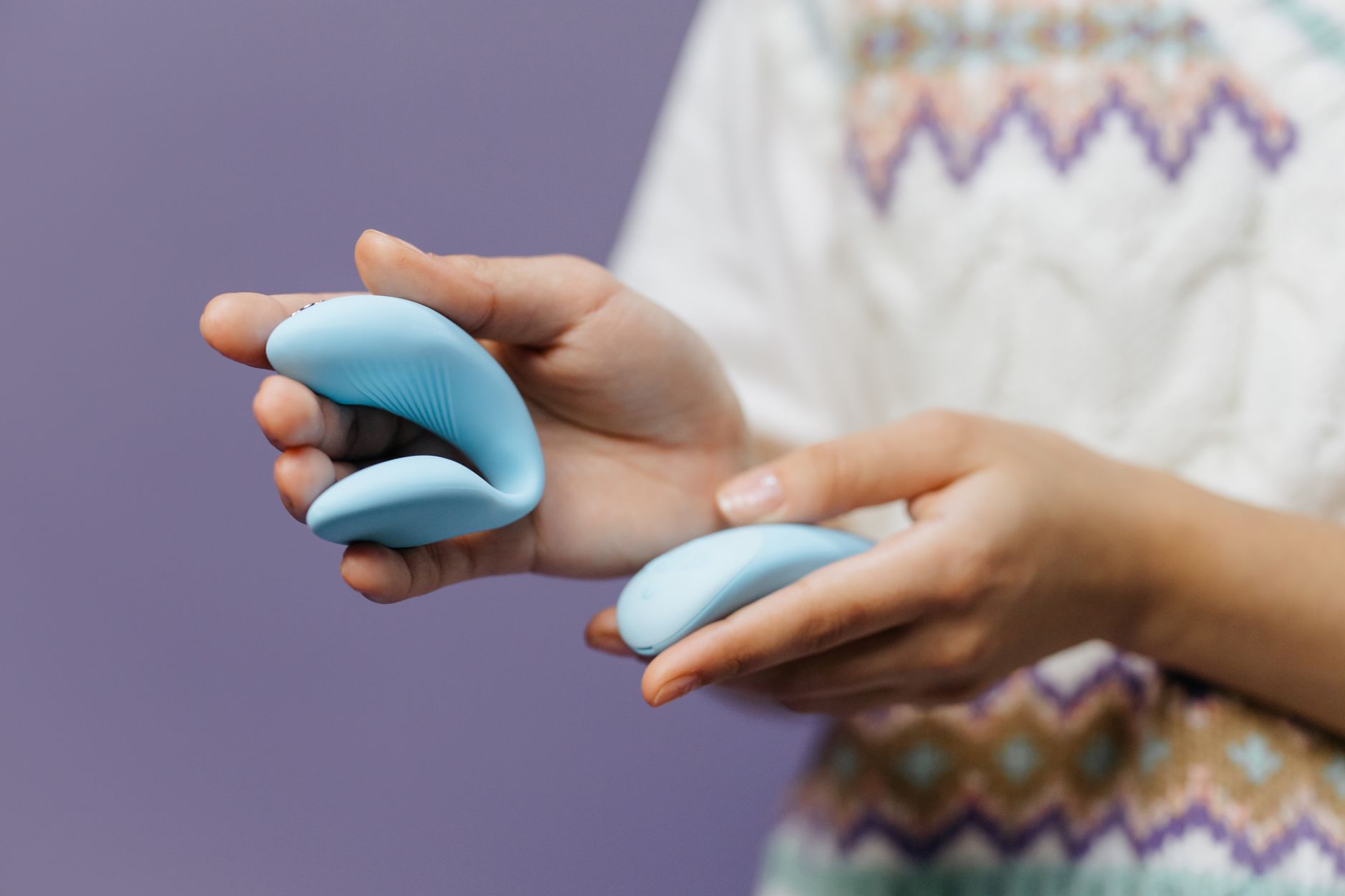
Photo by Hanna Brovko on Pexels
Why lemon vibrators work differently than other toys
Most vibrators use vibration alone. They buzz at a fixed frequency and expect the clitoris to keep up. That works great when your tissue is thick and blood flow is fast. During perimenopause, that approach can feel either too numb or too sharp, depending on the day.
Lemon clitoral vibrators use suction stimulation instead. Here's the mechanism: a gentle pulse of air creates a seal around the clitoris and releases it rhythmically. This draws blood into the tissue without the mechanical pressure that can hurt when you're more sensitive.
Second, suction works with your arousal curve, not against it. Because it's gentler on the opening, you can start at lower intensities and gradually build. That matches how your body wants to warm up during perimenopause.
Third, the pattern variety helps. A lemon vibrator typically offers multiple intensity levels and pulse patterns. When one intensity feels wrong on a given day, you're not stuck. You can shift to a different pattern or intensity in seconds.
The adjustment timeline: what to expect the first few weeks
If you're new to lemon vibrators, understand that your body needs an acclimation period. This isn't buyer's remorse. This is how sensation recalibrates.
Week 1. Start at intensity level 1 or 2. Your goal is not orgasm. It's to notice how the suction feels different from what you've tried before. Spend 5-10 minutes exploring without pressure to come. Many people find the sensation unfamiliar at first because it's so much gentler.
Week 2. Increase warm-up time. Use the lemon vibrator for 15-20 minutes, starting at low intensity and moving up only if it feels good. You're teaching your nervous system to recognize pleasure again at a slower pace. This is not laziness. This is exactly how perimenopause-era arousal works.
Week 3+. By now you'll know which intensity levels and patterns match your body on different days. You'll also notice that some days (usually the week before your period, or when estrogen is higher) the toy feels more intense. That's normal.
Practical setup: the things that change everything
Three logistics shifts make a massive difference:
Water-based lubricant is non-negotiable. Even on days when you feel wet, a small amount of external lube (applied to the toy, not inside) reduces friction between the toy and your skin. It also helps the suction seal work better. Use water-based only; silicone lube can damage the toy's silicone body.
Time your session. Early arousal is slower during perimenopause, so pick a time when you're not mentally rushed. An unhurried 30 minutes beats a frantic 10 minutes. Your brain's state matters as much as hormones do.
Manage expectations about orgasm timing. During perimenopause, orgasms can take longer to build and might feel different (less full-body, more localized). Some people have multiple smaller orgasms instead of one big one. Some have no orgasm but still feel deeply satisfied. All of this is normal. Stop treating orgasm as the finish line and notice what happens along the way.
The emotional piece that changes how the tool works
Here's something most sex toy guides skip: the mental transition matters as much as the physical one. Perimenopause often arrives alongside grief about aging, life changes, or the loss of your pre-perimenopause body. That grief doesn't disappear just because you buy a lemon vibrator.
What the tool does is give you permission to experiment. Using a lemon clitoral vibrator is a statement to yourself: "I deserve pleasure on my body's current terms, not its old ones." That reframe takes time.
If you're partnered, this is also a conversation moment. Explain that arousal is slower now, that it's biological, and that it has nothing to do with attraction. A partner who understands that you're not broken, just different, becomes an ally instead of a source of anxiety.
When to reach out to a doctor (actually important)
If you experience pain during use, stop and call your GP. Pain during perimenopause can signal vaginal atrophy that benefits from topical estrogen treatment. This is treatable and usually works within weeks.
If you've been using the lemon vibrator correctly for 4-6 weeks and still feel no sensation whatsoever, mention it to a doctor. Numbness can sometimes signal other things (medication side effects, neurological changes) that deserve attention.
If dryness is severe enough that it's genuinely uncomfortable even with lube, ask about vaginal estrogen cream. It's local, low-systemic absorption, and genuinely changes how your body feels.
FAQ: questions people actually ask
How long does it take to feel pleasure again after starting a lemon vibrator? Most people report a shift within 2-4 weeks, but "pleasure" looks different during perimenopause. You might notice subtle tingling, or a warm buildup, before you notice an orgasm. Trust the small signals.
Is it normal if the toy feels too intense even on the lowest setting? Yes. Start with the toy over clothing, or hold it at an angle so the seal isn't airtight. Build up to direct contact as your body adjusts. This is not weird; this is how sensitivity changes.
Can I use a lemon vibrator if I'm still having regular periods? Absolutely. Perimenopause spans a decade. You might still be menstruating and also experiencing the early sensation changes. The tool works regardless of where you are in the transition.
What if nothing happens and I feel broken? You're not broken. Perimenopause is the longest sexual transition most people go through. Some bodies take months to recalibrate. Give yourself that time. If you're concerned, a menopause-informed therapist or doctor can help rule out depression or other factors masking what's possible.
Should I use the lemon vibrator alone or with a partner? Both work. Solo use helps you learn what feels good without performance pressure. With a partner, it's a way to explore together and reset expectations about timing and sensation.
Are there other adjustments I should make beyond the vibrator? Yes. More foreplay, longer warm-up, lube, scheduled time without pressure, and sometimes conversation with your partner about what's shifted. The vibrator is one tool in a larger reset.
The thing to remember
Perimenopause isn't the beginning of the end of your sex life. It's the middle act, and it often gets richer because you stop performing and start exploring. A lemon vibrator is engineered for exactly this moment. Use it as permission to slow down, feel what's actually there, and trust that pleasure is still available. It just has a new rhythm now.
If you're ready to explore, start with our buying guide to understand which lemon vibrator style matches your needs. Or reach out to us at /contact with specific questions about your situation.
Sources
American College of Obstetricians and Gynecologists. (2021). "The Menopause Years." ACOG Patient Education.
Gangestad, S. W., Thornhill, R., & Garver-Apgar, C. E. (2005). Adaptations to Ovulation: Implications for Sexual and Social Behavior. Journal of Personality and Social Psychology, 88(1), 69-85.
Knight, R., & Yoshida, K. (2014). Menopause-Related Cognitive Decline and Estrogens. Nature Reviews: Endocrinology, 10(5), 276-282.