
Here's what happens when you've been away
When you take time away from pleasure, your body doesn't forget how to respond. Your neural pathways are still there. Your capacity for sensation is still intact. But your threshold for arousal shifts. What used to feel electric might feel muted. What used to build quickly might take longer. This isn't damage. It's recalibration.
I work with couples and individuals constantly navigating this exact moment. Someone returns to their body after months or years away, and they're often shocked by how different things feel. Then they panic. "Did something break?" No. You just need to relearn the language your body is speaking now.
Why sensation feels different after time away
Three things are happening biologically. First, your arousal response has literally atrophied slightly. Your nervous system hasn't been practicing the escalation sequence it used to know by heart. Second, your mind is in the way. There's anticipation, maybe awkwardness, possibly performance pressure. That cognitive load genuinely suppresses physical sensation. Third, your sensitivity baseline has reset. You're starting from zero, not from ten. That's not a step backward. It's a chance to rebuild.
The good news: lemon clitoral vibrators, particularly models that use air-suction technology, are almost purpose-built for this specific transition. They work differently than traditional vibrators. Instead of direct friction against tissue, they create gentle rhythmic suction that stimulates the clitoris without requiring the body to jump straight to high arousal. You can meet your body where it actually is.
Starting the conversation with yourself first
Before you restart, get honest about what caused the pause. Was it physical, emotional, medical, relational, or circumstantial? The why matters because it changes how you re-enter. If you've been away because of a medication adjustment or health issue, you might need to move slowly. If you've been away because of relationship tension, you need to address that separately from the physical restart.
Here's what I tell clients: sensation recovery isn't about rushing back to where you were. It's about discovering where you want to go next. Your body has changed. Your desires have probably shifted. Your preferences might be completely different. That's not a problem to solve. That's information.
The practical restart sequence
Begin with no pressure for outcome. Solo exploration comes first. Give yourself 3 to 5 sessions where the goal is literally just awareness, not arousal. Set aside 20 minutes. No rush. You're not trying to come. You're not trying to feel anything specific. You're just paying attention.
Start with the lowest setting on your lemon vibrator. If you're using a model with three or four intensity levels, begin on setting one. Most people who've taken time away are shocked by how quickly their body responds to even gentle stimulation. You're relearning the map. You don't need the whole territory right away.
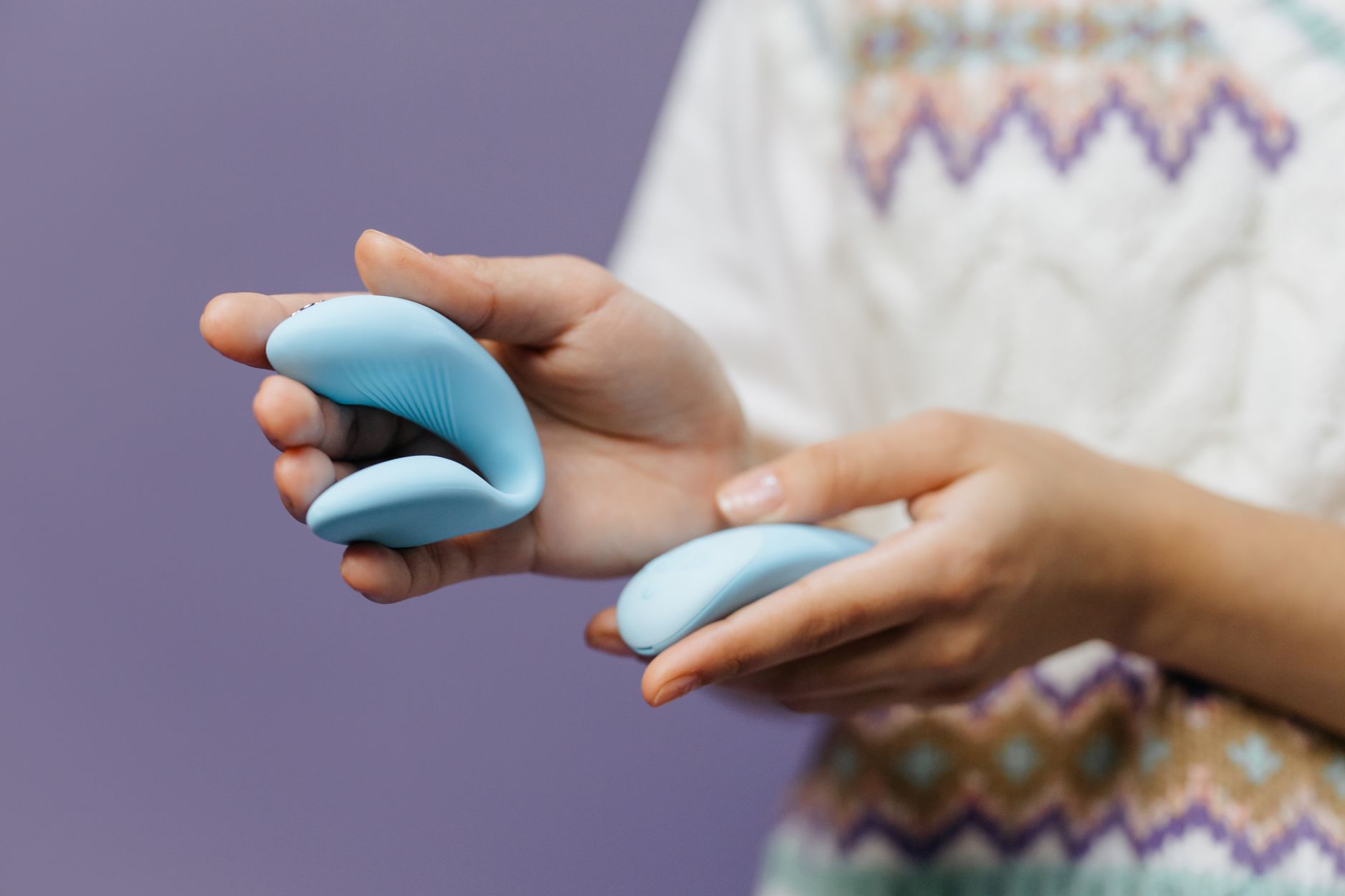
Photo by cottonbro studio on Pexels
Pay attention to what feels surprising. Maybe the suction is stronger than you expected. Maybe your sensitivity is more acute than you remember. Maybe certain areas feel completely different. Write it down if you need to. This feedback is how you're building a new baseline.
Allow at least 15 to 20 minutes of warm-up time before you introduce vibration. Your body has been in rest mode. Gradual build is not optional. The old trick of "jump straight to high intensity" doesn't work anymore. You're not recalibrating a familiar instrument. You're reintroducing yourself to someone you used to know.
When you're ready to include a partner
The conversation matters more than the timing. Don't surprise your partner with a lemon vibrator and expect them to understand what you're doing. Say something like: "I want to restart my sexual response. I'm using [this tool] to help me recalibrate. I'd love for you to be part of that when you're ready." Make it collaborative, not medical.
Start with presence over performance. Spend a few sessions just touching, exploring, talking. No lemon clitoral vibrator yet. You need your partner to understand that you're not jumping from zero to sixty. You're rebuilding the bridge together. When you do introduce a lemon vibrator, position it so your partner can see what feels good. Let them understand your cues.
You might discover that your partner's role changes. They might hold the vibrator. They might just be present while you use it. They might explore alongside you. The specific choreography matters less than the conversation about what actually feels good now.
Addressing common pressure points
If you're feeling self-conscious about needing a tool to restart, stop. Lemon vibrators, particularly the lem model with its air-suction design, are efficiency tools. They're not crutches. They're precision instruments. Your body is in a specific state right now. A lemon sucker works with that state, not against it. Using one is smart, not a failure.
If progress feels slow, that's information too. Slow recalibration often means your nervous system is genuinely asking for more time. That's not impatience on your body's part. That's integrity. Honor it. Some people need three weeks to feel comfortable returning to partner sex. Some need three months. The timeline is personal.
If you're returning after a health issue or medication adjustment, work with your doctor or therapist in parallel. Sexual health is part of overall health. Make sure you're being supported across the full picture.
Why air-suction makes the return easier
Traditional vibrators require your tissue to be ready for sustained, often intense friction. If your sensitivity has reset, that friction can feel overwhelming or numb at the same time. Air-suction technology bypasses that. It creates stimulation through rhythmic compression and release. The sensation is gentler but often more direct. You're not fighting against your body's current sensitivity. You're working with it.
The other advantage: control. On a lemon clitoral vibrator, you can stay on setting one for as long as you need. Many people find they can spend several minutes at the lowest intensity and then gradually move up as their response builds. That graduated approach is how your nervous system learns again.
The psychological reset matters as much as the physical one
Honestly, the biggest barrier I see to successful sensation recovery isn't biological. It's shame or expectation. Someone thinks they "should" be able to jump back in like nothing happened. They compare themselves to their old baseline instead of celebrating that they're returning at all. The mind genuinely suppresses pleasure when it's occupied with self-judgment.
Give yourself permission to be a beginner again. You're not learning pleasure from scratch. You're relearning it in a body that's changed and under circumstances that are different. That's a completely legitimate starting point.
If you're dealing with anxiety or grief about the time away, address that too. Sometimes sensation doesn't return because your nervous system is still holding the story of why you left. A therapist can help untangle that. Vibrators are tools for pleasure, not for processing trauma.
FAQ: Returning to pleasure with lemon vibrators
How long does it usually take to feel sensation again after a long break?
Most people notice a shift within 2 to 3 weeks of regular exploration. That doesn't mean they're back to baseline. It means they're reconnecting with the possibility. Full recalibration often takes 6 to 12 weeks, depending on why you took the break and how your body responds. Impatience here is the enemy. Slow is the actual speedway.
Will my sensitivity ever return to what it was before?
Your sensitivity might return differently. Your body isn't the same as it was. Your preferences aren't the same. That's not damage. That's growth. Many people find their pleasure is actually more sophisticated after a reset because they're not running on autopilot. They're paying attention.
Should I use lube when restarting with a lemon vibrator?
Yes. Even if your tissue is responding well, water-based lubricant makes everything feel smoother and reduces any friction that might feel uncomfortable. It also signals to your body that this is pleasure time, not medical time. The slickness is part of the reset.
What if sensation feels numb even with the vibrator on the highest setting?
Don't crank it to maximum expecting results. Numbness often means your nervous system is protecting itself. Back off. Use the lowest setting consistently for longer periods. Consider whether there's a medical component (medications, hormonal shifts, pelvic floor tension) that needs addressing. Sometimes numbness is also just your mind being too engaged in expectation. Meditation or grounding techniques might help more than intensity.
Can I restart with a partner present or should I do it solo first?
Solo exploration first gives you the safety to be fully honest about what you're feeling. Then bring a partner in gradually. This isn't about secrecy. It's about building confidence in your own data before you're managing someone else's reactions too.
What if my partner seems threatened by my use of a lemon vibrator during the restart?
This is worth discussing directly. Sometimes the threat is about feeling inadequate. Sometimes it's about discomfort with change. Talk to your partner about using lemon vibrators without awkwardness by framing it as a tool for both of you, not a replacement. The goal is shared pleasure, not solo pleasure.
Your body knows how to come back
Returning to pleasure after time away isn't about willpower or technique. It's about patience and precision. Your lemon clitoral vibrator is the precision part. The patience is your job. Give yourself the space to feel different sensations, to move at your own pace, and to discover what pleasure looks like now.
You didn't forget how to experience pleasure. You just took an intermission. The show is ready to restart whenever you are.
If you're navigating this transition and feeling stuck, that's exactly what rebuilding sexual confidence after a long break is designed for. You're not alone in this. Your body is waiting.