
Let's name what's actually happening
When a partner resists the idea of introducing a lemon vibrator, it's rarely about the toy itself. It's about what they think the toy means about them. They've internalized a story: if you need a vibrator, I'm not satisfying you. If you want external stimulation, I've failed. The toy becomes a referendum on their adequacy, not an addition to what you already have together.
That story is almost always wrong. But your partner believes it, which means the problem isn't the vibrator. The problem is the fear underneath.
Why this fear shows up, even in solid relationships
Men, and some women and non-binary partners, grow up with a specific narrative about sex: that their job is to deliver the orgasm. Their body, their timing, their technique equals your pleasure. A vibrator disrupts that story. It suggests that pleasure isn't a zero-sum competition where their performance directly determines your satisfaction.
They're also worried, though they won't say it directly, that you'll prefer the toy to them. That the vibrator is the beginning of the end. That you're signaling dissatisfaction in the relationship itself.
None of this is rational. But in a relationship, rational doesn't matter. Emotional truth matters.
The conversation before you introduce the toy
Don't show them the lemon vibrator first. Talk first.
Start here: "I want to try something that might feel really good, and I want to try it with you. This isn't about anything missing between us. It's about exploring what's possible together."
Then listen for the real objection. It usually sounds like one of these:
"I'm worried it means you're not satisfied with me."
"I don't want to feel like I'm being replaced."
"I'm not sure what my role would be."
"Won't it feel weird for you, having me watch?"
Each objection points to a different fear. Your job is to address the fear, not argue the logic of the toy. "It won't replace you" is logic. "I want your hands on me while I use this, and I want to feel you responding to what I'm experiencing" addresses the fear that they'll become spectators in their own intimate life.
Reframing what a vibrator actually does
Here's the radical truth: a lemon vibrator doesn't replace partnered sex. It enhances it. Not because the toy is better, but because it gives you access to sensations and orgasms that might otherwise take forever to build or might not happen at all.
That's not a criticism of your partner. It's physiology. The clitoris has 8,000 nerve endings. Air-suction stimulation on a clitoral vibrator activates those nerves in a way that no hand, mouth, or penis can replicate. Not because those are inadequate. Because they're different.
A lemon vibrator is a tool. So is a hand. They work together.
If your partner can understand that, the resistance often softens. You're not saying "I need something else instead of you." You're saying "I want something that lets me feel more with you."
Using the vibrator together for the first time
Start with the lowest intensity and with them present. You're not hiding. You're not going solo.
Let them watch. Let them touch you while you're using the lemon vibrator. Let them feel what happens to your body. When a partner sees the immediate physical response, when they feel your breath change and your muscles tense, when they realize they have a front-row seat to something that feels this good, the dynamic shifts.
They stop being worried they're being replaced. They start being interested in how to make the experience better for you.
Communicate out loud. "That feels amazing." "I like when you touch me here while I'm using this." "Can you hold me closer?" Your partner needs to hear that you're still experiencing them. That the vibrator is amplifying what's already there, not erasing them from the picture.
The integration that actually works
Three patterns that most couples land on:
Pattern One: The Lemon Vibrator as foreplay. You use it for 10-15 minutes while they touch you, kiss you, and stay engaged. Then you move into partnered sex. The vibrator primed you. Now they get to finish the job with the heightened sensitivity and arousal the toy created.
Pattern Two: The Simultaneous Experience. They're inside you, and you're using the lemon vibrator on your clitoris. You're both stimulated. You're both present. You both come harder than you would separately. This pattern is wildly popular in couples where penetration alone doesn't create enough clitoral stimulation for orgasm.
Pattern Three: The Trade-Off. You use the vibrator to come once, then they get your full attention without it. This works for partners who need time to warm up to the idea, or for couples managing stamina differences. One person comes via the lemon vibrator, then the focus shifts entirely to the other person's pleasure.
None of these patterns involve you alone with a vibrator while they sit on the sidelines. That's not the goal. The goal is integrating the toy into shared intimacy.
What to do if resistance continues
If your partner keeps refusing, dig deeper. The fear they're expressing ("It'll hurt my feelings" or "I'm worried you won't want me anymore") is usually covering a deeper insecurity.
Don't try to logic them out of it. Insecurity isn't logical. Instead, ask directly: "What would help you feel confident and included if we tried this together?" Maybe they want to control the intensity. Maybe they want to be the one to hold the vibrator. Maybe they want to be inside you while you use it.
Their participation matters more than the specifics. If they feel agency in how the vibrator gets used, it stops feeling like it's happening to them and starts feeling like something you're exploring together.
When partners come around, it changes everything
I've worked with couples where toy introduction was the turning point in their sex life. Not because the vibrator itself was magic. Because introducing it meant having an honest conversation about pleasure, about bodies, about needs that weren't being met. The toy was the vehicle for that conversation.
Once a partner understands that a lemon vibrator isn't a rejection, it becomes permission. Permission for you to ask for what feels good. Permission for them to invest in your pleasure separate from their own performance. Permission for both of you to stop treating sex like a test they have to pass.
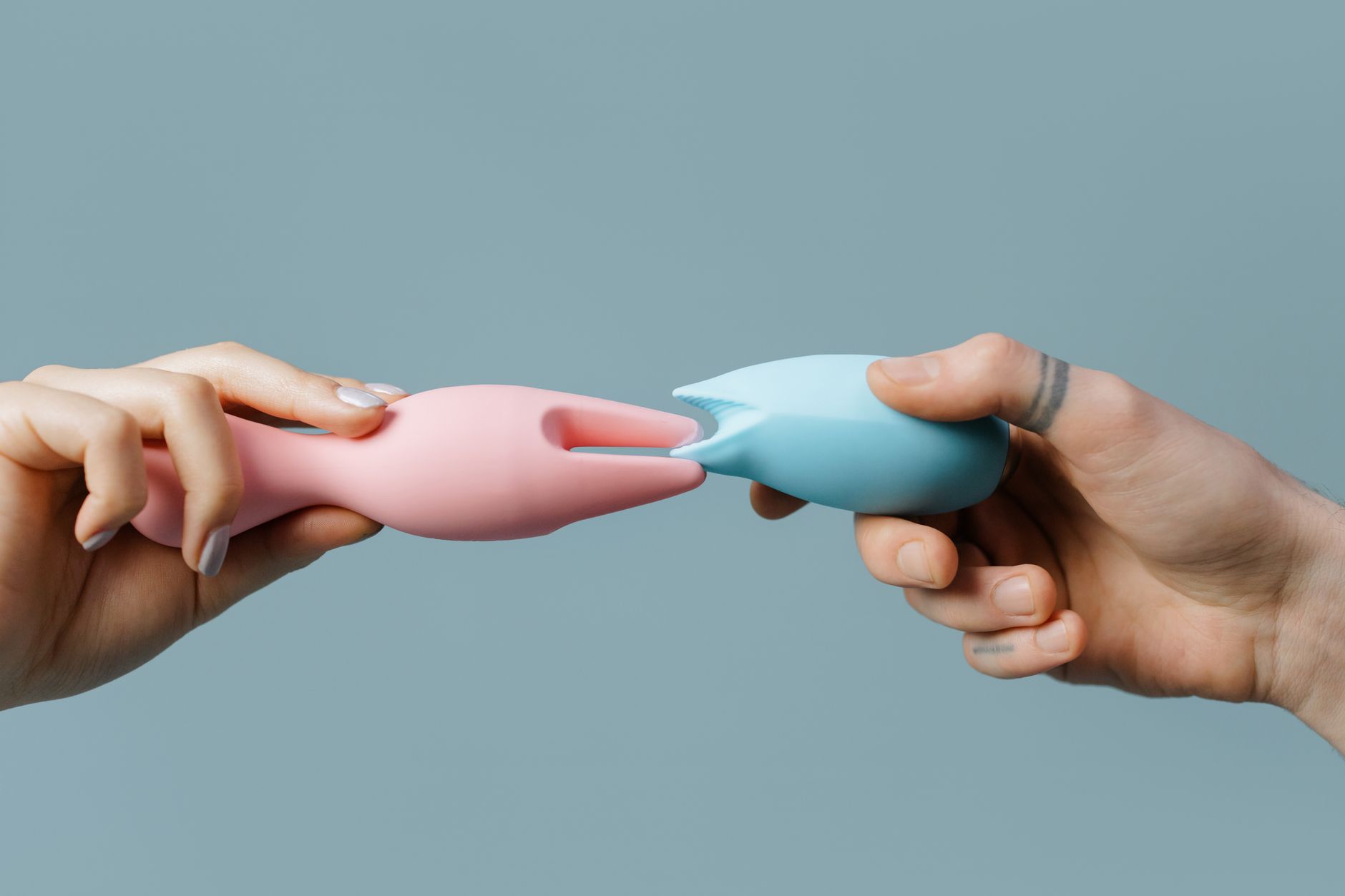
Photo by cottonbro studio on Pexels
The role your partner actually plays
This matters: your partner is not being replaced by the lemon vibrator. They're being given information about your body they didn't have before. You're showing them where sensation lives. You're teaching them, in real time, what turns you on. That's not a threat to the relationship. That's intimacy.
Their job isn't to be the only source of your pleasure. Their job is to be present while you explore it. To hold you. To respond to your responses. To be curious instead of defensive. Those are the things that actually bond couples. Not the performance of sex. The vulnerability inside it.
FAQ: Partners and toy introduction
Why do partners get scared of vibrators so quickly?
Because sex is one of the few places where most people feel they have clear expertise and control. A vibrator introduces a variable they can't predict or match. That creates vulnerability, and vulnerability triggers fear. The fear usually sounds like logic ("I don't like toys") but it's rooted in something deeper ("I'm scared I'm not enough").
Should I introduce the idea slowly or all at once?
All at once, but not the toy itself. Have the conversation when you're both calm and clothed, not in the middle of sex. Give them time to sit with the idea. Then, when you're both ready, show them the actual lemon vibrator. Seeing it demystifies it. It's not a threat. It's a tool. Let them hold it, turn it on, understand how it works. Knowledge reduces fear.
What if my partner agrees but then seems uncomfortable when we actually use it?
Stop immediately. Check in. Ask what's uncomfortable. It might not be the toy. It might be that they feel left out, or they're uncertain about what they're supposed to be doing, or the angle makes them feel awkward. Most of the time, discomfort can be solved by changing positions, by them taking control of the vibrator themselves, or by pausing and talking through what you each want.
Can I use the lemon vibrator alone if my partner isn't ready?
Yes. Your sexual pleasure doesn't require their permission. But if you want to eventually use it together, keep solo use private. When partners discover you've been using a vibrator alone, it often feels like betrayal. If you want joint exploration eventually, transparent communication about solo use prevents that hurt later.
How long does it usually take for partners to get comfortable with vibrator use?
It depends on their baseline relationship anxiety. Some partners are comfortable immediately after the first conversation. Others need weeks or months of building trust that the vibrator isn't replacing them. There's no standard timeline. What matters is that you're both moving forward together, not that you're moving fast.
What if introducing a vibrator creates conflict we can't resolve?
Then the vibrator is surfacing something bigger in the relationship. A partner who refuses to engage with your pleasure, who makes your needs feel shameful, or who uses sex as a control mechanism—those are relationship issues that go beyond the toy. Consider working with a couples therapist who specializes in intimacy. The vibrator is just the visible part of something deeper.
The conversation that changes everything
Your partner's resistance isn't about you being broken or unsatisfied. It's about them being scared. Name that. Say: "I think you're worried this means something about you. It doesn't. It means something about my body. I want to feel as good as possible, and I want you here while that happens. Will you be?"
Most partners, when they hear that, soften. They realize they've been having an argument that wasn't actually on the table. Once you name the real thing (fear, insecurity, worry about adequacy), you can actually address it.
A lemon vibrator isn't the end of partnered sex. For most couples, it's the beginning of a conversation about pleasure that's honest instead of defensive. That's where real intimacy lives. Not in performance. In presence. In being willing to explore what your partner actually needs and wants, and being secure enough to support that.
If you want to explore further, check out our guide on how to use a lemon vibrator for better orgasms with a partner. We also have practical advice for managing mismatched sensitivity levels, which often comes up once couples start integrating toys.