
Let's clarify what low sensation threshold actually means
You're not broken. What you're describing is a nervous system that processes sensation intensely. Conventional vibrators feel overwhelming because they use direct vibration on tissue that's already signaling "too much." The second you turn one on, you're flooded.
That's not pleasure. That's white noise.
A low sensation threshold means your nerve endings are working perfectly. They're just working at a lower volume before they hit saturation. The solution isn't forcing yourself to "get used to" intense stimulation. It's finding a device designed for precision, control, and graduated sensation. That's where lemon vibrators and clitoral suction tech enter the picture.
Why traditional vibrators feel too intense
Most vibrators use one-note oscillation. They buzz at a fixed frequency, usually between 5,000 and 10,000 Hz. That's fine if your nervous system needs noise to wake up. If you have a low sensation threshold, that same frequency feels like someone turned up the volume to painful.
Here's the physics part: vibration travels through tissue indiscriminately. It hits every nerve at once. There's no "off-ramp," no way to modulate what you're feeling. You're either at 7,000 Hz or off.
Clitoral suction does something completely different. Instead of vibrating, it creates rhythmic waves of pressure. Your clitoris is drawn gently into a small opening, then the suction releases and rebuilds. That cycle repeats at a pattern you can control.
Why this matters for you: suction activates different nerve pathways than vibration does. It's almost never too intense, even at higher pattern levels. Many people with low sensation thresholds report that a lemon vibrator feels calming at first, then gradually more arousing. Not overstimulating.
How to start with a lemon clitoral vibrator if you've been burned before
Five steps to get this right:
1. Begin with the slowest pattern. The Lemon Clitoral Vibrator has five patterns. Start at pattern 1. That's it. Don't jump around. Your job this first time is just to understand what the sensation feels like, not to chase an orgasm.
2. Apply water-based lube first. Lube reduces friction and changes how suction feels. It's gentler, more distributed, less direct. You're not there yet if you're dry. Add lube before you even switch it on.
3. Hold it at a slight angle initially. You don't need full seal contact yet. Let the device touch your clitoris lightly, almost like you're testing it. Gentle contact at an angle lets you control exactly how much suction you're receiving.
4. Take breaks every 30 seconds. Pull away. Let your nervous system reset. This isn't about endurance. It's about teaching your body that this device won't overwhelm you. That safety signal matters more than continuous stimulation.
5. Switch it off the moment it feels like too much. Not "a little much." Not "I can push through this." The instant your brain says "stop," you stop. You're retraining your relationship with pleasure, and that requires absolute respect for your body's signals.
The goal isn't an orgasm on day one. It's comfort and trust.
Moving from comfort to arousal
Once pattern 1 feels familiar, not just tolerable, move to pattern 2. You might stay here for three or four sessions. That's normal. Low sensation thresholds often come with a need for slower progression.
Lemon adult toys work in graduated fashion because of how suction itself functions. As you stay with a pattern for a few minutes, your tissue gets slightly engorged. Your clitoris swells slightly. The suction feels more intense not because the device changed, but because your body is responding. That's the difference between overstimulation and arousal building.
When you move to the next pattern, you're not starting from zero. You're starting from a place where your nervous system is already engaged. The jump feels manageable because it's literally a single pattern, not a massive leap in frequency.
Take the time you need. There's no timer.
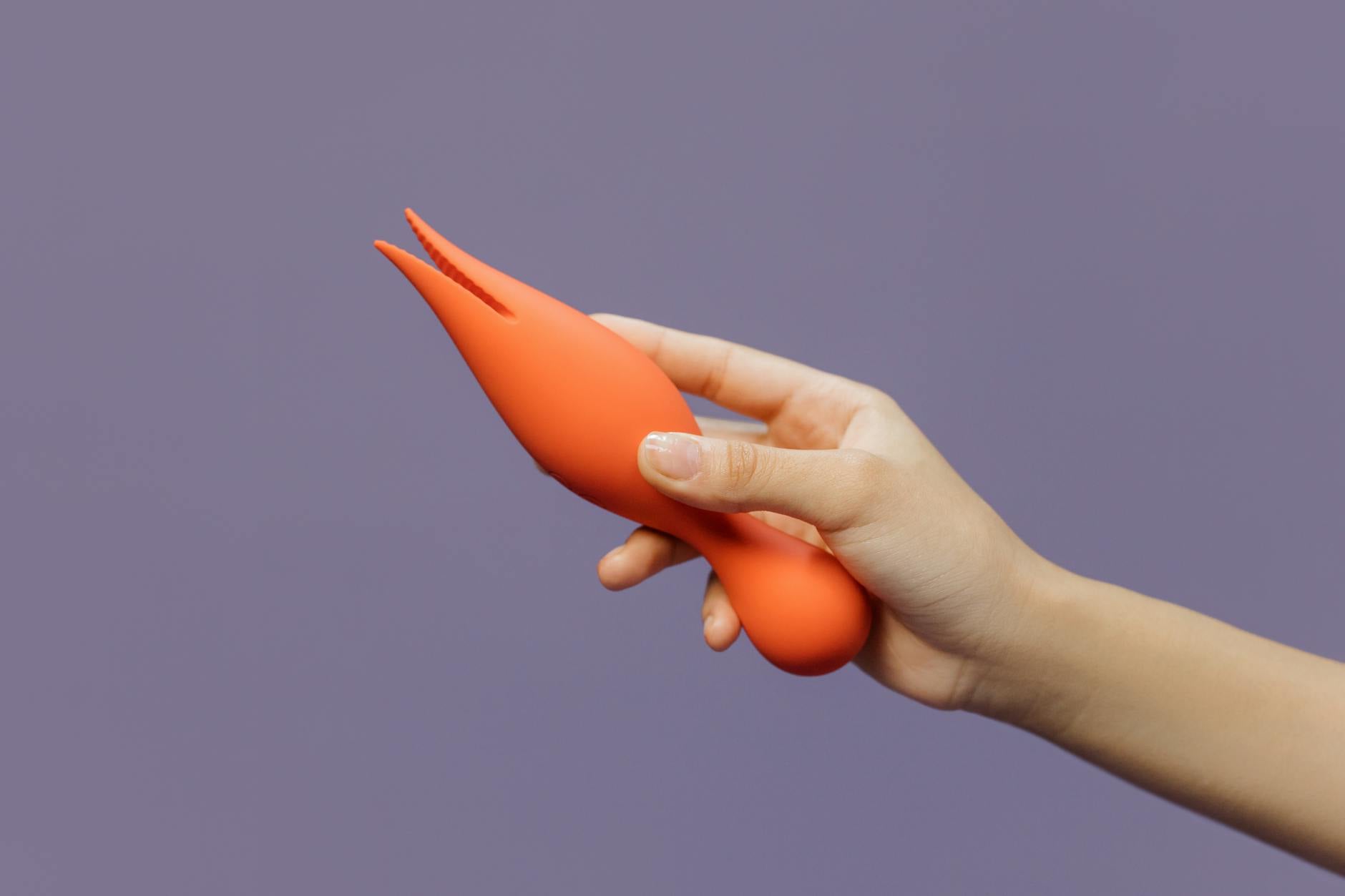
Photo by cottonbro studio on Pexels
The role of position and angle in sensation control
With a lemon clitoral vibrator, angle changes everything for people with low sensation thresholds. Full-seal contact at pattern 3 can feel intense. The same pattern at a 45-degree angle feels almost gentle.
This is your secret tool. You get to control sensation not just by changing patterns, but by changing contact. Experiment with this obsessively. Tilt the device. Shift your hips. Pull back slightly so the opening doesn't fully seal.
You're not cheating. You're customizing.
Some days your threshold will be lower than others. Hormones, stress, sleep, caffeine, where you are in your cycle. All of these shift your actual sensation threshold. A pattern that was perfect on Tuesday might feel overwhelming on Friday. That's not a failure. That's biology.
Keeping your angle adjustments in your toolkit means you never feel stuck. Lower threshold day? Adjust the angle and stay in pleasure. The device doesn't have to be perfect for you every single time.
What partners need to understand
If you're using a lemon sexual toy with a partner in the room, they need to know that low sensation threshold isn't low desire. It's not low pleasure capacity. It's the opposite.
When you find the right pattern and angle, orgasms can be intense. Your nervous system, when not overwhelmed, is capable of deep sensation. A partner's job is to witness that without trying to "help" by increasing intensity. Hands off. Let the device do the work. Your presence matters more than your input.
Many partners mistakenly think adding more sensation will speed things up. With a low sensation threshold, that almost always backfires. The moment you add stimulation on top of the clitoral suction, you cross the saturation point. Arousal drops instantly.
If you want partner involvement, that looks like them being present, responsive, and keeping their hands literally anywhere but the device. Touching your breast, your neck, your inner thigh. Not escalating the primary stimulation.
When sensation threshold shifts and you need to recalibrate
Sometimes low sensation thresholds change. Medication, hormones, aging, new relationship, stress levels. Your nervous system isn't static.
You might notice that pattern 2, which felt perfect for six months, suddenly feels weak. That's not failure. That's a signal to recalibrate. The lemon clitoral vibrator is still the right tool. You're just moving to pattern 3.
Other times, you might notice increasing sensitivity means lower patterns feel overwhelming. You go backward. That happens too. Neither direction is wrong.
This is why a device with graduated options matters. You're not locked into one intensity. You adjust as your body changes. That flexibility is built into how lemon vibrators function.
If you're managing medication side effects or hormonal changes and your sensation threshold is in flux, that's worth a conversation with a healthcare provider. Some medications do genuinely lower sensation capacity. Some hormone shifts do too. But addressing the root cause separately from finding pleasure tools is key.
Common fears people with low thresholds have
Fear 1: "Will I ever reach orgasm with something so gentle?" Yes. Suction-based stimulation at pattern 3, 4, or 5 produces orgasms that are often more intense than what vibration alone delivers, even for people with high sensation thresholds. You're not missing out.
Fear 2: "Will my partner think something's wrong with me?" Only if they lack information. Hand them this article. Or just say: "I get overwhelmed easily, and this device is calibrated for my nervous system." That's it.
Fear 3: "Is my low threshold permanent?" Maybe, maybe not. But it doesn't matter. You're building pleasure literacy with the body you have now. If it changes, you recalibrate.
Fear 4: "Should I be ashamed of needing a specific tool?" No. People with chronic pain use specific devices. People with migraines use specific tools. Your nervous system is part of your body too. There's nothing shameful about finding what works.
Setting realistic expectations for the first month
Week one: Comfort with the device, zero performance pressure. That's success.
Week two to three: You can move through patterns 1 and 2 without discomfort. You're starting to recognize what arousal builds feel like.
Week four: You might reach orgasm. You might not. If you do, it might feel different than you expect. That's normal. Suction orgasms often feel more localized and less full-body than vibration does initially. Your brain catches up over time.
Month two and beyond: You're fluent in your own sensation landscape. You know your angles, your patterns, your timing, your body's actual capacity. That knowledge is worth everything.
This isn't a race. You have time.
People also ask
How do I know if I have a low sensation threshold or if I'm just not aroused?
Low sensation threshold is when normal stimulation feels painful or overwhelming even when you're mentally aroused. You want to feel pleasure, your mind is willing, but the intensity is too much. Lack of arousal is when you feel flat across the board. No desire signal at all. These are different problems needing different solutions. If you're mentally engaged and your body's saying "too much," you have a low threshold. If you're checked out entirely, that's a different conversation, possibly one worth having with a healthcare provider.
Can I build up tolerance to sensation over time?
Slightly, yes. But not in the way you might think. You're not forcing your nervous system to accept more. You're training yourself to recognize arousal signals at lower intensities, so your baseline shifts. With continued use of a lemon clitoral vibrator, many people find that what felt intense in month one feels medium in month three. That's your body learning what pleasure looks like for you, not your nervous system breaking down.
Is suction better than vibration for low sensation thresholds?
For most people with low thresholds, yes. Suction is easier to control, less jarring, and activates different nerve pathways. But every body is different. If you've never tried suction stimulation, a lemon vibrator is worth testing. If you try it and vibration genuinely works better for you, that's valid too. Trust your experience over the general rule.
What if I reach a pattern level that still feels too intense?
You don't have to go higher. Ever. Pattern 3 can be your ceiling. Orgasms at pattern 3 are still orgasms. There's no achievement badge for using pattern 5. Find your sweet spot and stay there. The device has five patterns for variety and flexibility, not because you're obligated to use all of them.
Should I tell a new partner about my low sensation threshold?
Yes. Not as a confession or an apology. As information. "I have a low sensation threshold, which means I need gentler or more graduated stimulation. Here's what works for me." Most partners appreciate the clarity. It removes the guessing game of "Am I hurting her?" and replaces it with "Here's what actually helps."
Can antidepressants or other medications affect sensation threshold?
Absolutely. SSRIs especially can reduce sensation and increase numbness. Hormonal contraceptives, thyroid medication, and other drugs can shift your threshold too. If your threshold changed after starting medication, that's worth mentioning to your prescriber. Sometimes there are alternatives. Sometimes the medication is worth the trade-off. Either way, you deserve to know the connection.
The actual point
A low sensation threshold is not a flaw in your wiring. It's a feature that requires a different tool. The lemon vibrator was invented partly for this reason. Clitoral suction works precisely because it's controllable, graduated, and almost impossible to overstimulate with.
You deserve pleasure that doesn't come wrapped in pain or numbness. You deserve a device that matches your nervous system, not one that fights it.
Take your time. Respect your body's signals. Trust the process. Your best orgasms might be ahead of you, not behind.
If you have questions about how the Lemon Clitoral Vibrator works for your specific situation, reach out. We're here to help.