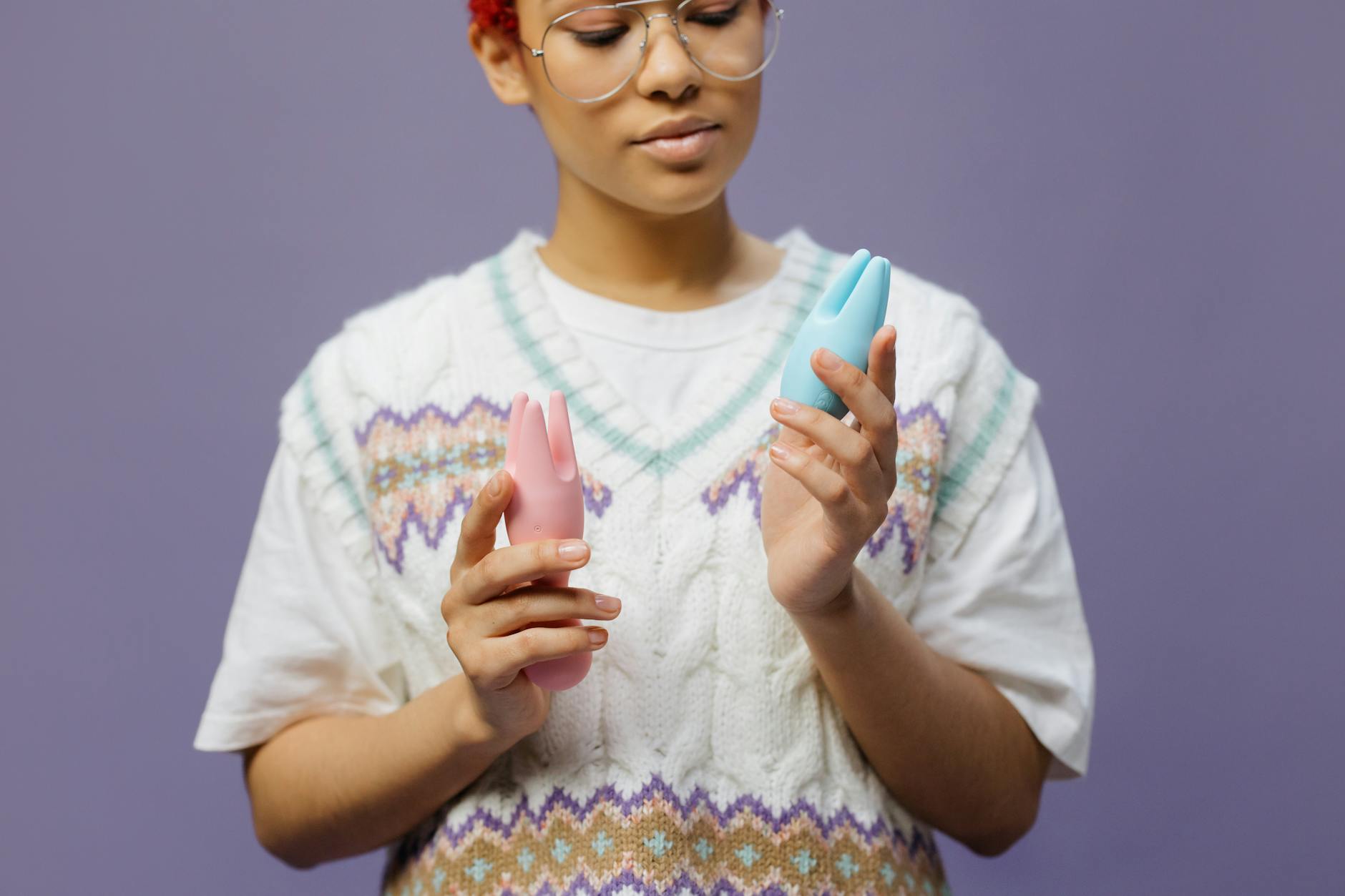
Let's name the actual problem
You want to explore solo pleasure with a lemon vibrator. But the moment you think about actually doing it, your brain starts narrating: What if nothing happens? What if it takes too long? What if I'm broken? What if I'm doing this wrong?
That's not laziness. That's anxiety hijacking your nervous system before you've even started. And it's wildly common.
Why anxiety kills pleasure (and what's actually happening in your body)
When you're anxious, your sympathetic nervous system (fight-or-flight) is running the show. Blood flow redirects away from your genitals and toward your large muscles. Your pelvic floor tightens. Lubrication decreases. Your brain is literally too busy scanning for threat to process pleasure.
Meanwhile, you're sitting there with a lemon clitoral vibrator in hand, frustrated that your body isn't cooperating, which makes the anxiety worse. It becomes a feedback loop: anxiety dampens sensation, lack of sensation feeds the anxiety, and suddenly you're convinced you're incapable of pleasure.
You're not incapable. Your nervous system is just in the wrong gear.
The good news is this is fixable. It takes intention, but it's absolutely fixable.
Build a container before you turn anything on
This is not about making excuses to delay. This is about signaling safety to your nervous system so it will actually cooperate.
Three things need to happen first.
1. Time and space. You need at least 45 minutes where interruption is impossible. Not where it's unlikely. Where it's impossible. Partner out of the house. Phone in another room. Do not do this when you're mentally tracking whether someone might walk in.
2. A clear end state. Decide now that you're not going in with an orgasm target. You're exploring sensation. That's it. Release the outcome. This single mental shift removes about 70% of the pressure.
3. Comfort without stimulation. Get a blanket. Light a candle if that helps. Put on music or don't. Use the bathroom first. Have water nearby. Make your body feel safe and cared for before pleasure is even part of the equation.
This isn't indulgent. This is you telling your nervous system: "We are safe. We have time. No one is watching. We can relax."
Warm up your brain, not just your body
Most people jump straight to the vibrator. That's backwards.
Spend 10-15 minutes doing literally nothing sexual. Lie down. Feel your whole body on the bed. Notice temperature. Notice tension. Breathe in for four counts, hold for four, out for six. Slow breathing (longer exhale than inhale) is the fastest way to downshift from sympathetic to parasympathetic (rest-and-digest) mode.
Then, if you want, do some gentle touch. Stroke your own arm. Touch your neck, your collarbone, your thighs. Not with the goal of becoming aroused. Just noticing sensation. Tuning into what feels good at a low intensity.
This 10-15 minute warm-up is doing the heavy lifting for your nervous system. By the time you pick up a lemon vibrator, you're already halfway to calm.
Start low and slower than you think you need to
The Lemon Clitoral Vibrator has multiple intensity settings. Most people with anxiety default to high intensity right away because they're unconsciously rushing to the finish line.
Don't do that.
Start at pattern 1 or 2. Spend 2-3 minutes there. Let your body adjust. Notice what feels good about it. If your brain starts narrating ("This isn't working," "I'm broken," "This is taking too long"), that's anxiety talking. Acknowledge it: "That's my anxiety. I'm still exploring." Then return attention to sensation.
Sensation is the only thing that matters right now. Not outcome. Not speed. Not whether you orgasm. Just: What does this feel like? Where does it feel good? What's the difference between intensity 1 and 2?
When you shift from "Am I doing this right?" to "What am I noticing?" you've moved from your anxious brain into curiosity. That's the mental state where pleasure actually lives.
Expect the anxiety interruption and have a response ready
Here's something nobody tells you: you can be doing everything right and anxiety will still show up halfway through.
You'll feel good for five minutes, then suddenly your brain says, "Wait, am I wet enough?" or "Why does this feel weird?" or "Am I taking too long?" This is called the intrusive thought, and it's not a sign you're doing something wrong. It's just what happens when you're learning to rewire a nervous system that's used to being vigilant.
The response is: notice it, don't fight it, return to sensation. "There's the anxiety thought. That's not new information. Back to what I'm feeling right now."
Don't add a second layer of anxiety by freaking out that you're anxious. Anxiety during anxiety is what kills the whole thing. Anxiety plus curiosity is what moves through it.
The pressure myth: sensation takes longer, not forever
Anxiety tells you it should be instant. That if you're "normal" you'd be done in five minutes.
That's false. Solo exploration when you're rewiring an anxious nervous system takes longer. Twenty minutes. Thirty minutes. Sometimes the whole session is exploration without orgasm, and that's still a win.
Here's why this matters: the longer you practice moving through anxiety without bailing, the more your nervous system learns that this is safe. That sensation is safe. That exploration is safe. Your body will relax faster next time because it's remembered this.
Each session teaches your nervous system something. Even the ones where nothing dramatic happens.
When to switch tactics (and when to just stop)
There's a difference between "I'm anxious but pushing through" and "This isn't working, I need a break."
If you've been going for 20 minutes and you feel stuck, switch things. Change intensity. Change position. Stop using the vibrator and just touch yourself. Put on a different song. Sometimes a small environmental change is enough to reset your nervous system.
If you've tried switching and you still feel trapped in your head, stop. Not as failure. As information. Your nervous system is telling you it needs a different approach today.
Take the pressure completely off. Go do something else. Tomorrow or next week, try again. The practice isn't in forcing an outcome. It's in repeatedly showing your nervous system that solo pleasure with a lemon vibrator is safe and there's no deadline.
Over time, that repetition rewires the anxiety response.
Building the skill (because it IS a skill)
Using a lemon sexual toy while managing anxiety isn't something you either can or can't do. It's a skill you build through practice.
Some sessions will feel easy. Some will feel like a slog. Both are normal. Both are teaching your nervous system something important about safety and sensation.
If you're consistently struggling even with all these tools in place, how to use a lemon vibrator alone as a first-timer covers foundational steps that might help reset your approach. You might also check out why lemon vibrators are best for nervous first-time users for more on choosing the right tool.
Your anxiety isn't a character flaw. It's your nervous system being protective. Once you translate that protection into safety containers and patient exploration, pleasure becomes possible again.
FAQ: Anxiety and solo exploration with lemon vibrators
How long should it take to feel something with a lemon vibrator if I'm anxious?
There's no timeline. Anxiety dampens sensation, so it might take 15 minutes to feel anything noticeable. That's completely normal. The more you practice without a deadline, the faster your body will respond over time because the anxiety itself will ease. Pressure about timing is what keeps anxiety in place.
Is it normal to go numb halfway through?
Yes. That's usually either desensitization from holding too much intensity, or your anxiety spiking and your nervous system literally numbing you as a protective response. If it happens, drop to a lower intensity or take a break. Your body isn't broken. It's just regulating.
What if I feel shame or weirdness the whole time?
Shame and weirdness are forms of anxiety. They're your nervous system saying, "This doesn't feel safe." The antidote isn't forcing yourself through. It's noticing the feeling without judgment and then gently returning attention to curiosity about sensation. "I notice shame is here. That's okay. What does my body actually feel right now?" Over sessions, the shame response will ease as you practice staying present.
Can a lemon clitoral vibrator help anxiety go away faster?
A lemon vibrator is a tool. The real work is rewiring your nervous system response through repeated, pressure-free exploration. The vibrator helps because it provides consistent sensation that your brain can eventually learn to pair with safety, but it's the practice that matters. Using a lemon vibrator without addressing the underlying anxiety pressure will just recreate the same loop.
Should I use lube even if I'm not naturally lubricated due to anxiety?
Yes. Lubrication affects sensation and comfort, and when you're anxious, your body naturally produces less. Using a water-based lubricant removes the friction discomfort and lets you actually feel the vibration properly. It's not a sign you're failing. It's practical support for your nervous system.
How do I know if I should see a therapist about this, or if it's just normal nervousness?
If the anxiety is keeping you from exploring at all, or if it's showing up in other areas of your life around pleasure or sexuality, a therapist who specializes in sexual anxiety or somatic therapy can be hugely helpful. This isn't weakness. It's getting professional support for your nervous system. Many therapists now specifically work with clients on pleasure anxiety and sexual confidence, and they can teach you tools that go beyond what solo exploration alone can do.