Let's name the thing nobody talks about
One partner wants sex twice a week. The other wants it twice a month. One gets aroused in five minutes. The other needs thirty. One initiates constantly. The other waits to be approached. This is called desire discrepancy, and it's the quiet reason long-term couples stop having sex entirely. Not because they fell out of love. Because the gap between their wants feels too big to bridge without someone feeling rejected or pressured.
Here's the thing: that gap isn't a sign you're incompatible. It's normal. It's also solvable.
Why desire mismatches happen (and why they're not your fault)
Desire isn't a switch that stays in the same position. It shifts with stress, hormones, health, work, sleep, and whether you feel emotionally safe with your partner. Two people syncing up perfectly for years and then drifting is not a failure. It's biology.
The higher-desire partner often feels rejected. The lower-desire partner often feels pressured. Both feel broken. Neither is. What's broken is the assumption that desire should match automatically. It doesn't. It needs active management.
When one partner has significantly lower desire, the higher-desire partner often stops initiating entirely to avoid the pain of rejection. This sounds protective. Instead, it creates distance. Sex stops. Touch stops. Emotional connection thins. The cycle becomes: less intimacy, less desire, even less desire.
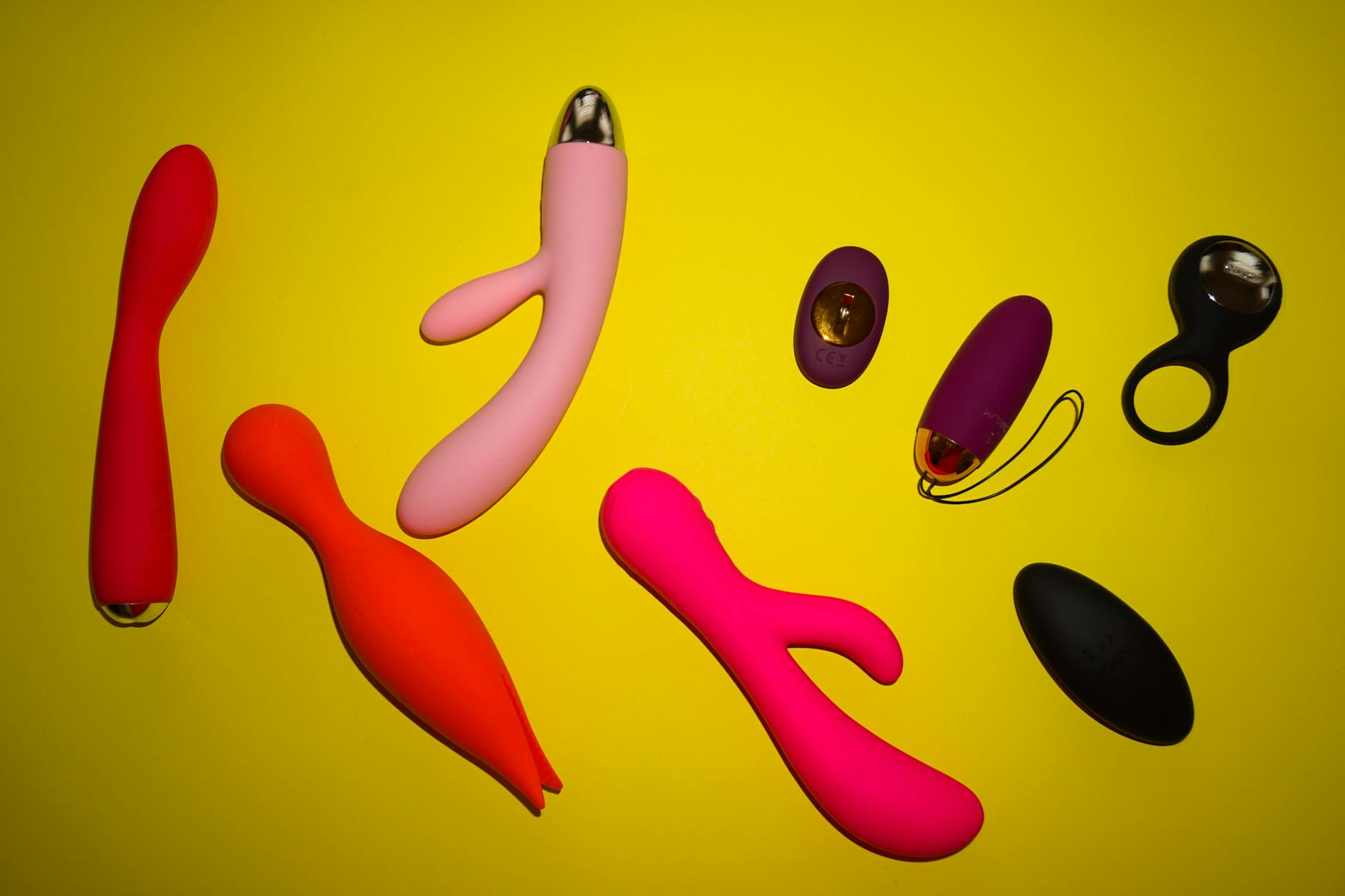
A lemon clitoral vibrator changes this equation because it removes the spotlight from the lower-desire partner's responsiveness. Pleasure becomes about sensation, not about proving attraction.
How desire gaps actually work (the real version)
Desire discrepancy has a pattern. The higher-desire partner initiates, gets rejected or a lukewarm yes, feels hurt, pulls back. The lower-desire partner notices the withdrawal, feels guilty, wants to reconnect but doesn't feel turned on, tries anyway out of obligation, and the experience becomes mechanical. Both partners walk away more disconnected than before.
Over months or years, this loop kills physical intimacy entirely. The higher-desire partner stops trying. The lower-desire partner stops feeling guilty. They become roommates. Or they resent each other quietly. Or they look elsewhere.
Here's what changes when you introduce a clitoral vibrator: the focus shifts from "does my partner want me" to "what feels good to my body." That distinction is everything.
The conversation that has to happen first
Before any toy, before any attempt, you need to have a conversation that's different from the ones you've probably already had. Not "Can we have more sex?" That conversation has failed already. Instead: "I miss being close to you. The way we've been approaching this isn't working for either of us. I want to try something different. I want to focus on what actually feels good instead of what we think should happen."
That second sentence is crucial. You're naming that the old approach failed. You're taking pressure off both of you. You're suggesting that pleasure, not obligation, is the new goal.
The lower-desire partner often won't feel instantly aroused by this conversation. They might feel relief instead. Relief that you're not asking them to perform. Relief that you're acknowledging the old dynamic was painful. That relief can be the entrance to actual desire.
If they're not ready, say it clearly: "I'm not asking for an answer today. I'm telling you I want to try this. When you're ready to talk about it, I'm here."
How to introduce a lemon clitoral vibrator into this dynamic
Do not buy it and surprise them. Do not leave it on the nightstand and hope they notice. That backfires across the board. Instead, show them this article or similar information. Say: "I read about this. It might help us reconnect. Are you curious?"
Curious is the threshold. Not eager. Just curious.
When they're curious, ask them what concerns them. Usually it's one of three: "I'll feel like you're not into me." "It'll feel like I'm doing something wrong." "It'll be weird and awkward." Name each one. Solve each one.
"I'll feel like you're not into me." Your response: "The opposite. I'm trying to focus on what feels good to your body instead of pressuring you to feel something you don't feel yet. That's the opposite of not being into you. That's me caring about your actual pleasure, not my ego."
"I'll feel like I'm doing something wrong." Your response: "You're not. Pleasure works differently in different bodies. This toy is designed to work with how your body actually responds. It's not a fix. It's a tool."
"It'll be weird and awkward." Your response: "Maybe the first time. Then less so. But yes, trying something new is awkward. That's part of it. And I want to be awkward with you instead of not talking at all."
First time together: how to actually do this
Give yourselves the right conditions. Not when you're stressed about work or kids or money. Not right after a conflict. Choose a time when you both have space, when the house is quiet, when you're not exhausted.
Start with touch. Your partner's pleasure is not the job of the vibrator alone. It's the job of your hands, your mouth, your attention. Use hands first. Warm them up. Pay attention. Notice what makes them respond.
When you introduce the lemon clitoral vibrator, explain what you're doing before you do it. "I'm going to try this here. Just for a few seconds. You tell me if it feels good or if you want to stop." Start on the lowest setting. Many lower-desire partners are surprised by how quickly sensation builds. You don't need high intensity.
While you're using it, keep touching them elsewhere. Keep eye contact if they want it. Keep your hand on their chest or their arm. The vibrator is one element. You are the other element. Both matter.
If they enjoy it, don't jump to the goal of orgasm. Let pleasure be enough. Sometimes the first experience is just "oh, that feels interesting." That's success.
If they're uncomfortable, stop immediately. No negotiation. No "just a little longer." Stop means stop. Then ask what felt off. Usually it's one of three things: too intense, wrong angle, or too much pressure. Adjust and try again later if they want to.
The conversation that comes after
Do not leave them to figure out how they felt alone. Ask, directly: "What was that like for you?" Listen without defending or interpreting. If they say "It felt weird," don't jump to "But did you like it?" Just let it sit.
If they're willing to try again, ask what they want different. More time. Different timing. Different angle. Lower intensity. Hands first, vibrator second. Your mouth instead of your hands. Let them build the experience they actually want, not the one you think they should want.
Over several attempts, something shifts. The lower-desire partner realizes pleasure isn't contingent on performing for you. The higher-desire partner realizes that sometimes the goal is connection, not release. Both of you get curious about what actually works instead of stuck in what should work.
This doesn't magically erase desire mismatch. But it stops being a source of resentment. It becomes solvable.
When this approach doesn't work (and what to do instead)
Sometimes one partner simply doesn't want to engage with toys or with the higher-desire partner's needs at all. If your partner refuses the conversation entirely, or agrees to try and then resents you during, that's not a toy problem. That's a deeper incompatibility that probably needs a therapist.
I'm not being dramatic. If someone won't engage with their partner's needs and won't get help addressing it, a vibrator isn't going to fix that. What it will do is remind both of you that you're out of sync and probably need professional guidance.
If that's your situation, consider couples therapy specifically trained in sexual concerns. A Gottman-trained therapist or a sex therapist can help you untangle whether the mismatch is solvable or whether you're working with fundamentally incompatible needs.
But if your partner is willing to explore, even hesitantly, a lemon clitoral vibrator can be the thing that breaks the cycle of pressure and rejection that's been killing your intimacy.
The long-term reality
Desire doesn't magically sync after one good experience. You'll probably find a rhythm where one partner still wants sex more often. That's okay. What changes is the quality of what you do have and the absence of resentment around it.
You might use the vibrator sometimes. You might not. Sometimes the novelty fades and you go back to what you know. Sometimes you find that without pressure, desire naturally rises for the lower-desire partner. Sometimes it doesn't.
What matters is that you're building pleasure together instead of performing for each other. That's the shift that saves couples, not the specific tool.
If you're stuck in a real desire gap and you're curious about trying this, start with the conversation. Skip the toy for now. See if your partner is actually willing to imagine this differently. If they are, read about how to adjust techniques based on sensitivity levels. Then decide together if a clitoral vibrator makes sense.
If you've been trying for months and nothing shifts, or if the resentment is too deep, that's the moment to reach out for professional support. Couples therapy isn't failure. It's the thing that keeps couples together when they care but can't figure it out alone.
Questions people actually ask
Will using a vibrator make my partner feel inadequate?
Maybe, at first. That's why the conversation matters more than the toy. If you frame it as "I want to focus on your pleasure instead of pressuring you," most partners eventually understand. If they stay stuck in "You're saying I'm not enough," that's something to work through with a therapist, because that's about their insecurity, not about the toy.
What if my partner is interested but I'm the one who feels weird about it?
That's just as valid. You might worry about looking like you're being replaced, or that introducing a toy means your relationship has failed. Both are old stories. Introducing a tool that works for your partner's body doesn't diminish your role. It changes it. You're still the one creating safety, initiating touch, being present. The vibrator is a supporting actor, not the lead.
How often should we use it?
Whenever it feels good. For some couples, that's once a week. For others, it's once a month or once every few months. There's no right frequency. The moment it becomes obligatory or mechanical, it stops helping. Stop using it and come back to it later.
Can we use it if my partner is the higher-desire one?
Absolutely. If you're the lower-desire partner, using it together can be a way to meet your partner's needs without forcing yourself to feel something you don't. The vibrator does the heavy lifting. You show up. Over time, that pattern can shift desire for you too, because you're not under pressure.
What if we try it and neither of us likes it?
Then you tried something and learned you don't like it. That's useful information. Put the toy away. Go back to what you know. Or try a different tool. Or try a different approach entirely. The goal is to find something that works, not to make a specific tool work.
Can this help if we haven't had sex in years?
Maybe. It depends on why you stopped. If you stopped because of desire mismatch and resentment, yes, reframing around pleasure instead of obligation can help restart things. If you stopped because of relationship damage or infidelity or deep trust issues, a toy alone won't fix that. You need to address the underlying issue first. Start with an honest conversation or a therapist.