
Let's talk about the plot twist nobody warns you about
You hit 40 and suddenly your orgasms feel different. Stronger. More localized. Sometimes almost overwhelming. Most people assume pleasure declines after 40, so when the opposite happens, it feels confusing. Maybe a little scary. But here's the thing: this shift is real, it's common, and it's actually an upgrade.
The intensity isn't random. Your body is changing in ways that concentrate sensation rather than dilute it. Understanding why this happens, and how to work with it rather than against it, is the difference between thinking something's wrong with you and discovering one of the best parts of midlife sexuality.
Why orgasms get more intense after 40
Three biological factors collide in your favor.
First, your pelvic floor naturally tightens slightly over time. This isn't weakness—it's tension, and while that sounds bad, it actually amplifies sensation. The muscles that contract during orgasm are shorter, tighter, and more reactive. Imagine the difference between a rubber band with slack versus one wound tight. The same amount of force creates stronger contractions.
Second, your brain's sexual response pathway gets faster after 40. Your nervous system has decades of data about what turns you on. It doesn't waste time with preliminary arousal nonsense anymore. Stimulation goes straight to the target, which means orgasms build faster and feel sharper.
Third, and this is the weird one that nobody talks about: estrogen shifts. Yes, estrogen drops after 40 (and especially in perimenopause), but the drop isn't uniform across your body. Clitoral tissue sometimes becomes more sensitive before it becomes less so. This is temporary, but it's real. Some people describe this window as the most responsive their clitoris has ever been.
The intensity isn't the problem—the surprise is
When orgasms suddenly feel more intense, the first instinct is to pull back. You might avoid stimulation or cut sessions short because the sensation feels too strong. This is completely normal and also the opposite of what you need.
Intensity without control creates anxiety, which creates tension, which actually makes orgasms feel uncomfortable rather than good. So the goal isn't to reduce the intensity. The goal is to stay present with it, which requires a different approach than what worked at 30.
This is where lemon vibrators, specifically the air-suction design of tools like the Lem, become genuinely useful. They create a different kind of stimulation than traditional vibration. Instead of linear movement, suction builds gradually and gives you a control point you can modulate. You're not at the mercy of the intensity. You're directing it.
How to recalibrate your approach
Five concrete shifts help most people adjust to stronger sensations.
Start lower than you think you need to. If you're used to patterns 5 or 6 on the Lem, begin at 2 or 3. Your body will surprise you with how much sensation is present at lower settings. You're learning the new baseline, not rediscovering your old comfort zone.
Extend your buildup phase. Faster arousal doesn't mean better arousal. Take 15 to 25 minutes to warm up. This isn't extending the session for no reason. It's giving your nervous system time to integrate stronger sensations so they feel pleasurable rather than jarring.
Use breathing as your control dial. When intensity ramps up, people tend to hold their breath. Instead, slow your breathing down. Longer exhales activate the parasympathetic nervous system, which calms the startle response. This single shift can make the difference between feeling overwhelmed and feeling amazing.
Pay attention to your pelvic floor. Here's a counterintuitive one: relax your pelvic floor between contractions. Most people clench through the entire stimulation window, which actually makes intensity feel chaotic. Let the muscles relax fully between pulses, then let them contract naturally. It's like the difference between a tense grip and a relaxed hand that still has strength.
Stop chasing the same type of orgasm. Orgasms after 40 often feel different from what you remember. Less like a big explosion, sometimes more like concentrated waves. Some people describe them as deeper or more interior. Expecting the same arc of intensity you felt at 25 guarantees disappointment. Meet this version of your body where it actually is.
Why air-suction vibrators work better for this stage
Traditional vibrators move in straight lines. The Lem and similar lemon vibrators use air-suction technology, which creates a different sensation entirely. Instead of vibration, suction gently pulls the clitoral tissue into a chamber, then releases. It's rhythmic and building rather than constant.
For people experiencing more intense sensations, this design has two huge advantages. One, you can feel the buildup happening. It's not a shock. Two, the sensation feels more rounded and less raw, which is exactly what people need when their baseline sensitivity has shifted higher.
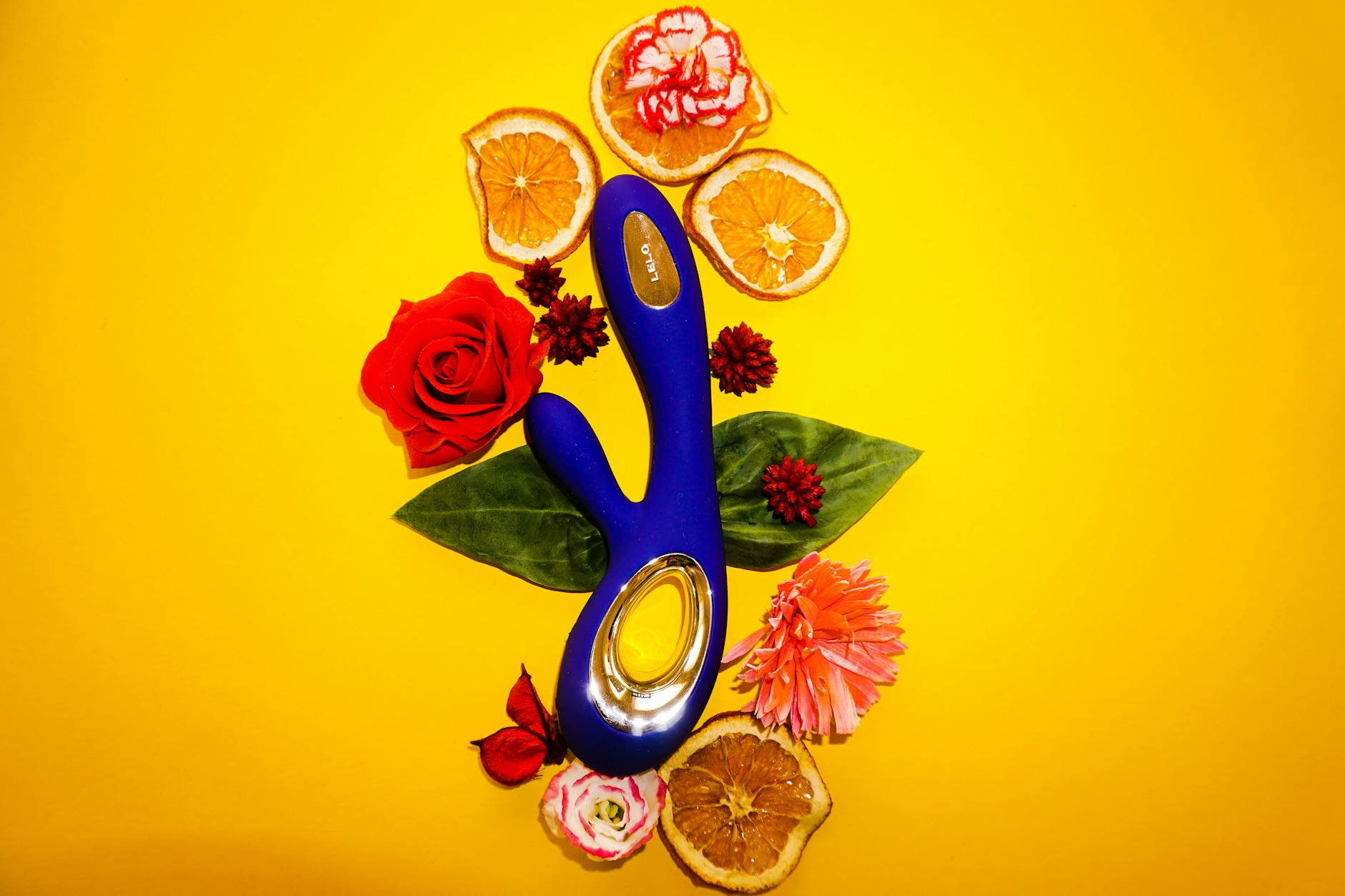
Photo by DRT.fm on Pexels
When to involve a partner (or not)
If you're partnered and your orgasms suddenly feel intense, your partner might interpret this as you being more easily satisfied. That's the opposite of what's happening. You're not easier to satisfy. You're experiencing a different type of stimulation that your nervous system is processing more sharply.
The conversation to have is simple: "My body's responding differently right now. I need slower buildup and more control over the speed. This isn't about you—it's about me learning what this feels like." If your partner wants to help, great. But honestly, exploring this shift solo first is often the clearest path. You get to understand your new baseline without anyone else's expectations in the room.
The anxiety part nobody mentions
Intense orgasms sometimes come with anxiety, especially if they're catching you off guard. Your brain interprets sudden strong sensation as a threat. This creates a feedback loop where intensity triggers tension, which makes the next orgasm feel even more overwhelming.
Breaking this loop requires separating the physical sensation from the emotional story you're telling about it. The physical intensity isn't dangerous. Your body isn't broken. You're not reacting too strongly. You're in a normal midlife transition where sensation is simply more concentrated. Repeat that. Out loud if you need to. Your nervous system needs the permission to settle.
This is where solo exploration with something like a lemon clitoral vibrator, on your own timeline, genuinely helps. You're not performing or worrying about a partner's response. You're just learning how your body feels right now.
The overlooked benefit: connection to your own pleasure
Here's what I see in my practice constantly: people who experience suddenly intense orgasms often reconnect with pleasure itself. Not the idea of pleasure or the performance of sexuality, but actual sensation. Actual enjoyment.
When your body is giving you such clear, undeniable feedback, it's hard to ignore or minimize your own pleasure. You can't pretend you're not feeling something this strong. This often translates into better communication with partners, clearer boundaries, and actually saying no to things that don't serve you. Intense orgasms after 40 are often the gateway to people finally prioritizing their own satisfaction.
FAQ
Is it normal for orgasms to feel much stronger after age 40?
Completely. Many people experience increased intensity in their 40s and 50s due to pelvic floor changes, faster neural responses, and shifting hormone patterns. Some describe it as the most intense orgasms of their lives. This is not a sign of dysfunction—it's a normal variation in sexual response across the lifespan.
Why do orgasms feel almost painful when they're very intense?
When intensity is new or unexpected, your nervous system sometimes flags it as a threat rather than pleasure. This creates tension that makes sensation feel sharp rather than good. The fix is to slow everything down, breathe into it, and practice staying present with stronger sensation. Your brain learns quickly that intensity is safe.
Can lemon vibrators help me control overly intense orgasms?
Yes. The air-suction design of lemon vibrators gives you more control over buildup compared to traditional vibration. You can feel the progression and adjust speed or pause easily. This helps your nervous system stay regulated while still experiencing full sensation.
Should I use higher or lower intensity settings on my vibrator if sensation feels too strong?
Start lower than you think you need. Stronger overall sensation means you need less stimulation to reach the same response. Pattern 2 or 3 might give you what pattern 5 used to provide. Go slow and build from there.
Is it okay to take breaks during arousal when things feel too intense?
Absolutely. Pausing is not failure. It's your nervous system regulating. Pause, breathe, let sensation settle, then continue when you're ready. Some people find that multiple shorter peaks feel better than chasing one long intense orgasm.
Does this intensity last, or will it change again?
It varies. Some people maintain this intensity for years. Others find it shifts gradually as hormone levels change further. Rather than waiting for it to shift, embrace it now. This phase of sexual response is worth exploring fully.
The real story is opportunity, not decline
The narrative around sex after 40 is almost entirely about loss: loss of fertility, loss of hormone levels, loss of youthful responsiveness. What they don't tell you is that after 40, your body often becomes more responsive in ways that matter more. Orgasms concentrate. Pleasure becomes less abstract and more undeniable.
Lemon vibrators, clitoral vibrators designed with suction technology, and air-pulse toys generally work beautifully in this phase because they match the actual way your body is responding now. Not as a replacement for what you had before, but as the right tool for what you have now.
If you're experiencing a sudden shift toward more intense sensation, you're not experiencing a problem. You're experiencing an upgrade. Learning to work with it, rather than fighting it, is how you unlock some of the best sexuality of your entire life.
Have questions about navigating this shift or want to explore tools that match your changing body? Let's talk.