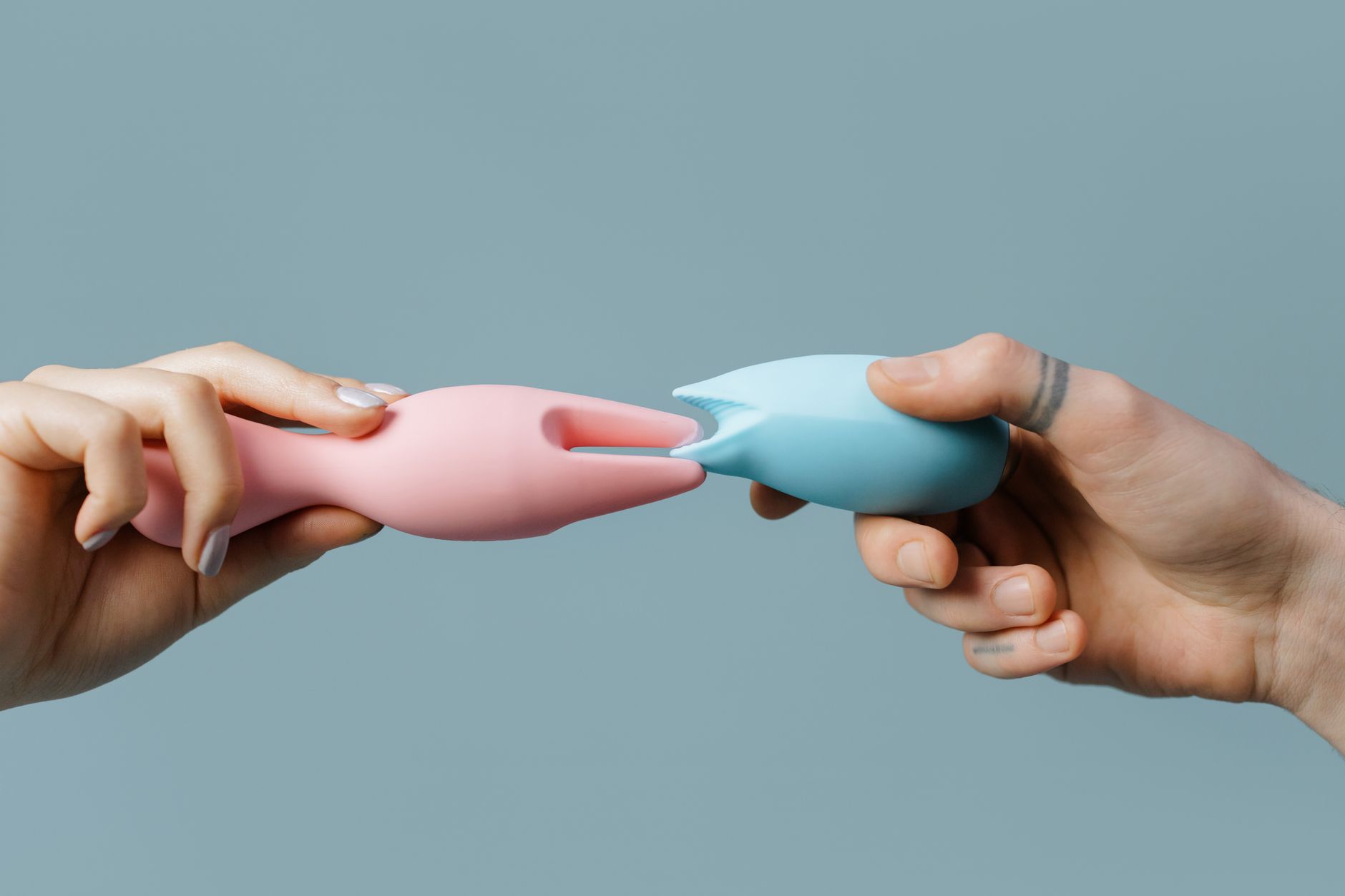
Let's talk about the first-toy conversation
Honestly, the scariest part isn't the toy itself. It's the moment one of you suggests it. You're worried they'll think you're unsatisfied. They're worried they'll sound desperate or weird. Both of you are probably overthinking what should be a pretty simple conversation about trying something new together.
Here's the reality: couples who introduce toys together report higher satisfaction and stronger communication overall. It's not about fixing anything. It's about exploring together, which is its own form of intimacy.
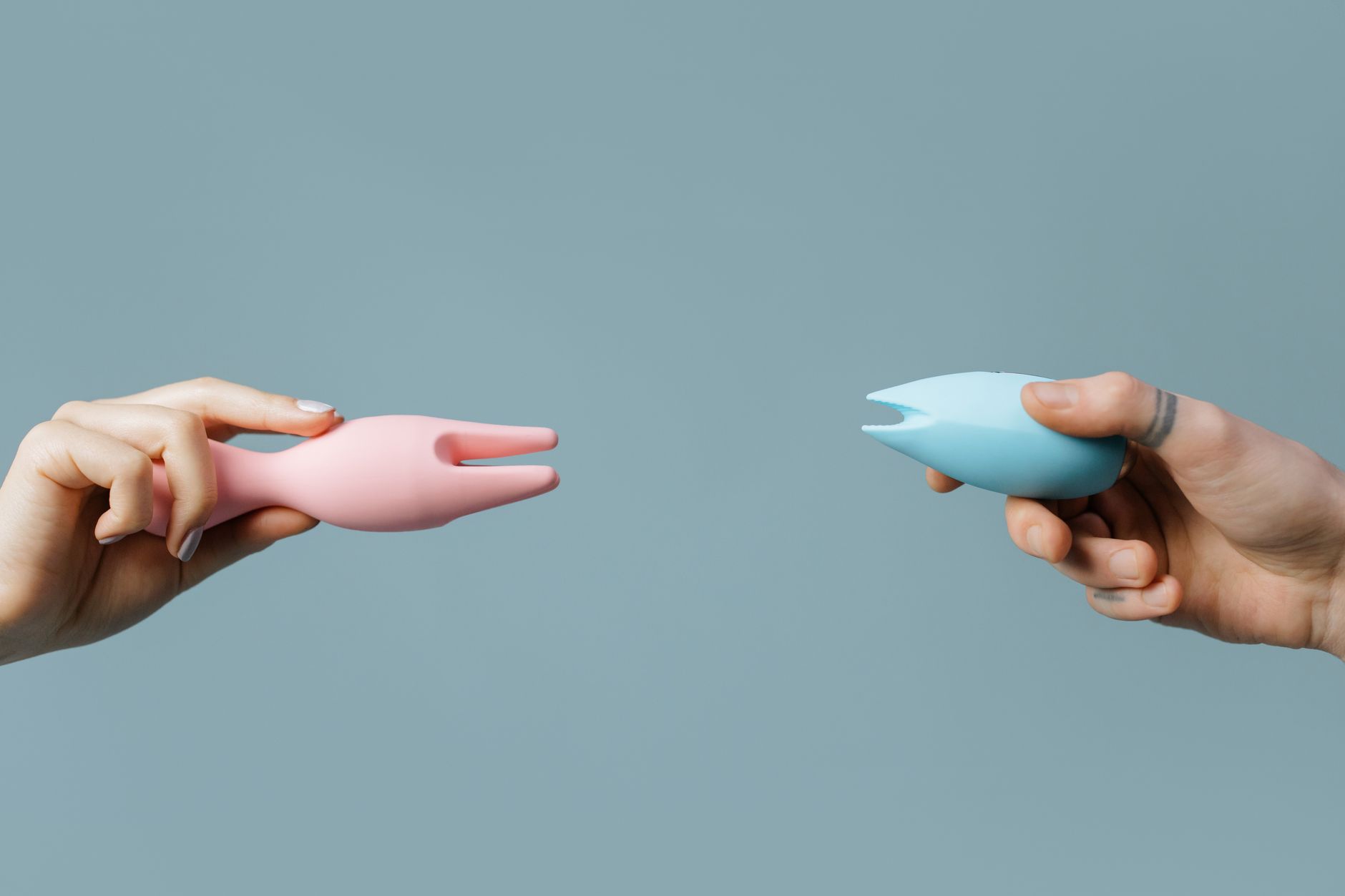
Photo by cottonbro studio on Pexels
Why lemon vibrators work for couples trying this for the first time
When I work with couples navigating this transition, I see the same hesitation come up repeatedly. Will it feel impersonal? Will it replace intimacy? Will someone feel self-conscious?
A lemon vibrator actually solves for all of that. Here's why.
The suction-based design of lemon clitoral vibrators is different from traditional vibration. It feels more like external stimulation without the intense buzz that sometimes feels isolating. That matters for couples because you can stay close, maintain eye contact, and it doesn't create a barrier between you. Your partner isn't watching you disappear into the toy. You're both present in a new sensation together.
Second, the learning curve is low. There's no complicated setup, no rhythm to coordinate. One of you holds it, you both feel what happens, and you adjust together. That simplicity means less anxiety and more actual pleasure.
Third, lemon vibrators are designed for external stimulation. Most first-time couple scenarios involve one partner with a vulva and another with a penis. External stimulation keeps penetration available if you want it, which means the toy isn't replacing anything. It's adding.
How to bring it up without the awkwardness
The conversation matters more than the timing. Here's what I tell couples.
Don't make it a big deal or a confessional. Treat it like you'd suggest trying a new restaurant or watching a show together. Casual, collaborative, not loaded. "I've been thinking about trying a toy together" works better than "We need to spice things up" because the first one is about curiosity and the second one signals something's broken.
Frame it as exploration, not a solution to a problem. If one of you has lower sensitivity or slower arousal, that's fine to mention as context. But the primary frame should be "I want to experience more with you" not "I want to fix you."
Give your partner time to absorb it without pressure. If you bring it up, give them space to sit with the idea before expecting an immediate yes. A lot of people need to process it privately first.
If they're hesitant, ask what the hesitation is specifically. Is it discomfort with the idea? Worry about performance? Fear it'll feel cold or mechanical? Each concern has a different answer, and jumping to "never mind" shuts down the conversation entirely.
Choosing the right lemon vibrator for your first experience together
Here's where a lot of couples freeze up. The Hello Nancy Lemon vibrator comes in different patterns and intensities. Which one is right for you?
For couples exploring for the first time, start with the lower intensity settings. Pattern 1 or 2 is genuinely enough to create a noticeable sensation. You can always increase intensity later once you both feel more comfortable. The goal isn't maximum pleasure on day one. It's comfort and curiosity.
Consider ergonomics for partners. If your partner will be holding or guiding the lemon vibrator, test how it feels in their hand. Is the angle easy to reach? Can they adjust it without straining? A toy that's awkward to hold kills the mood faster than anything else.
Think about noise level if that matters for your situation. Some couples care, some don't. But if you're in a shared living space, noise is worth considering upfront rather than discovering mid-experience.
The actual first time using it together
Start with foreplay that doesn't involve the toy. Build arousal naturally. The lemon vibrator isn't a starter pistol. It's something you introduce after things have already begun.
When you bring it in, let your partner hold it first. Watching your partner explore the device on you, feeling them figure out the patterns and speeds, creates a collaborative experience. You're not performing for the toy. You're being attended to.
Communicate continuously but casually. "That feels good" or "try pattern 2" or "slower for a second" isn't clinical. It's information. Partners who communicate during sex report better outcomes, period. Using a toy makes this easier because you have something concrete to talk about.
Don't expect an immediate orgasm. Especially for people with vulvas, the first experience with a new sensation takes time to integrate. The goal is to notice what feels different, what's pleasant, what you want to adjust. That's success on attempt one.
Keep it brief if it feels awkward. Ten minutes of exploration beats an hour of forced intimacy. You can always try again.
What happens after the first time
The conversation after is as important as the experience itself. Check in with how your partner felt. Did they enjoy it? Was there something they'd change? What surprised them?
You'll likely find that once the novelty wears off and it becomes a normal tool in your intimate repertoire, you both relax. Some couples use lemon vibrators regularly. Others use them occasionally. Both patterns are fine. The point is that you've opened a door to exploration together, and that changes the dynamic of your physical intimacy.
Many couples I've worked with find that bringing a toy into their intimate life actually improves communication outside the bedroom. You've practiced asking for what you want, receiving feedback, and collaborating on pleasure. Those skills transfer everywhere.
One note: if one of you isn't into toys even after trying them, that's also fine. Not every tool works for every person. What matters is that you both felt comfortable enough to try and that you respected each other's experience.
Maintenance and care
Before and after each use, rinse the lemon vibrator with warm water. After a few uses, wash it with a toy cleanser or mild soap. Let it dry completely before storing.
If you're using it during partnered sex with penetration, make sure you're being thoughtful about transitions. Hand hygiene matters. Clean hands between activities prevents bacterial transfer.
Keep it somewhere accessible but discreet if you want privacy. A drawer in your nightstand beats a shelf where housemates or kids might accidentally find it.
The bigger picture
Using a lemon vibrator as a couple isn't about saving a relationship or fixing dysfunction. It's about building intimacy through shared curiosity. You're learning about each other's bodies together, communicating about pleasure, and normalizing the idea that desire is collaborative.
If you've been together for years, it can feel like novelty for its own sake. And maybe it is. But novelty has value. It interrupts routine and creates new neural pathways around pleasure. For newer couples, it sets a tone early that exploration and communication are normal parts of your sexual life.
The first toy conversation feels like a big deal in the moment. Looking back, most couples realize it was one of the easiest conversations they needed to have. The anxiety was bigger than the actual moment.
You deserve pleasure, together and individually. Using the right tool doesn't diminish that. It just makes it more possible.
People also ask
Will a lemon vibrator make us feel disconnected during sex?
The opposite often happens. Because a lemon clitoral vibrator doesn't require positioning changes or create barriers between partners, you can stay close. You can kiss, make eye contact, and maintain skin contact. Many couples find this more intimate than penetration alone, not less.
What if my partner thinks I'm bored with them?
This is the most common anxiety, and it's worth naming directly. You're not introducing a toy because someone's failing. You're introducing it because curiosity is healthy and pleasure is collaborative. If you frame it that way from the start ("I want to try something new together, not instead of you"), it changes the entire context. And if your partner still feels insecure, that's a conversation worth having outside the bedroom first.
Is a lemon vibrator too intense for someone's first toy?
No. The lower intensity settings are gentle. If your partner prefers softer stimulation, start on pattern 1. You can always increase intensity, but you can't undo overwhelming sensation. Going slow builds confidence and pleasure.
What if we try it and hate it?
That's completely normal. Not every tool works for every body. The win isn't loving the toy. The win is that you communicated, tried something, and got to know each other's preferences better. That information is valuable whether you use the toy again or not.
Can we use a lemon vibrator during penetrative sex?
Yes. External stimulation during penetration works beautifully for many couples. It can intensify sensation and make orgasm more likely. Just be mindful of hand positioning and transitions between activities.
How do I know if my partner is actually into this or just going along with it?
Ask directly and create space for honesty. "Do you actually want to try this, or are you doing this for me?" is a fair question. If they're uncertain, invite them to sit with the idea and check back in later. Pressure ruins everything. Genuine curiosity makes it work.
Next steps
If you're thinking about trying a lemon vibrator with your partner, start by having the conversation. See how they respond. If there's openness, pick a simple starting point (the lower intensity settings) and build from there. If you have questions along the way, reach out to our team. We work with couples all the time, and your questions aren't unusual.
Your pleasure, together and individually, matters. Tools like lemon vibrators just make it easier to explore.